Showing posts with label Christianity. Show all posts

Monday, January 04, 2016


False Testimony?
 
Josephus
Debates about the existence of Jesus go back many centuries and one of the most commonly used pieces of evidence concerning the historical existence of Jesus is the so-called Testimonia of Josephus. It has been used repeatedly over the centuries to establish that Jesus was a real historical figure. The Testimonia occurs in two places in Josephus’ Antiquities of the Jews, (18, 3, 3, and 20, 9, 1.)1.

Friday, June 20, 2014

A Note on Nietzsche
and Protestant Christianity


Friedrich Nietzsche
 
The German philosopher Friedrich Nietzsche has had over the years a up and down reputation. That his philosophy contains many dangerous and questionable elements is obvious.1 However a couple of things are usually forgotten or not noticed in his writings. I will deal with here an aspect of Nietzsche's philosophy.

Friday, May 23, 2014

Freeing the Mind
Part I
The emergence of Religious Toleration in the West


Book Cover
 
One of the most important features of our modern Western societies is religious tolerance. In fact it is such an intrinsic / organic feature of our societies that it gives the appearance of always being so. Well that is not the case at all.

Monday, May 05, 2014

Revenge Fantasy
The Left Behind Books Part I
The Background – Hating America

First Book of the Left Behind series

Almost 20 years ago Tim LaHaye and his writer Jerry B. Jenkins started putting out one of the most successful publishing successes of the 1990’s and early 2000’s. This was of course the Left Behind series of books which sold in the millions upon millions and helped to make Tim LaHaye a major player in the Evangelical movement in America. What is of interest in this series of books is that they are a revenge fantasy of murderous wish fulfilment.1

Wednesday, May 01, 2013


True Faith
The French Wars of Religion
Part 1 - Origins

Jean Calvin

Little known today, at least among the non-residents of France are the repeated series of French Religious Wars that erupted in the last half of the 16th century and paralyzed France politically and morally from c. 1560 to 1595 C.E.

Friday, January 25, 2013

Among the Barbarians

Medieval Doctor "Treating" Patient

In the years after the First Crusade the Muslims of the Middle East got to know the new comers to the Middle East. The "Frankish" Christians from the West. What they found, was aside from the new conquerors military expertise, which was considerable, was that over all they didn't have a lot to admire. Not only were they from a Muslim point of view idolatrous unbelievers / infidels they were over all considered pretty uncouth.1

Saturday, December 24, 2011

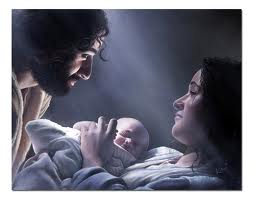
Noel
Nativity Scene
Perhaps one of the most evocative of modern Christmas Carols is Chris de Burgh’s A Spaceman Came Travelling, from his strongly Religiously flavored album Spanish Train.

So for this time of year let this lovely piece fill your mind, while we wait another year for a touch of the divine.

Saturday, August 20, 2011

“Christian” Imperial Charity

Portia disguised as young Lawyer

Shakespeare’s play The Merchant of Venice is as per usual as a play an excellent play. However it’s excellence as a play and of course Shakespeare’s well deserved status as a truly great playwright has to a large extent muted the response to the fact that the play has some truly ugly features to it.

It of course is commonly recognized that the play is anti-Judaic.1 It is also recognized that the play’s depiction of Shylock is a collection of stereotypes and clichés by in large. That these clichés and stereotypes and anti-Judaic myths, were later transmitted into racial anti-Semitism is also recognized. But then the “buts” come rolling in. We are treated to arguments that Shylock is a rounded character that he is given good speeches; that the play is about the triumph of love and charity, that it is fairy tale, that Shylock is a fantasy villain, a hobgoblin, and a wicked uncle that we are not to take any of this seriously in the slightest. That Shylock is such an obnoxious individual, and he is, that his being Jewish is incidental.

Sunday, July 10, 2011

Saints
An Irreverent Short Note

St. Christopher Carrying the Christ Child

I was brought up a Catholic, but now I’m a lapsed or has the jargon goes a “recovering” Catholic. One of the things I most remember about my years of growing up as a Catholic is the Saints.

We Catholics seemed to have Saints for everything. From St. Christopher, the patron St. of travellers to national Saints like St. Louis and St. Joan of Arc, the patron St’s of France to St. Edward the Confessor and St. George of England. Of course it got a little sad when St. Christopher was removed from the list of Saints on the rather good grounds that he never existed.1 Such a pity I rather liked the story of him carrying the Christ child across a river. But still there are hundreds of Saints to choose from to address your messages to the ear of God.

Sunday, April 24, 2011

Jesus the Little Known
A Note

Icon of Jesus

Jesus of Nazareth will undoubtedly be considered by many people has one of them most influential if not most influential person who ever lived. It is sad that this extraordinary influential person is one we know very little about. In real terms.

Sunday, April 04, 2010

The Trial of Jesus

Jesus on Trial before Pilate

On this Easter weekend it is perhaps germane to discuss probably the most significant trial in human history, the “trial” of Jesus.

I put trial in quotation marks because I am suspicious that anything that could reasonably be called a trial took place at all. Why I think so will become clear as I get further into this posting. First however we have to mention the four main accounts of the alleged trial or perhaps I should say trials of Jesus.

I am of course referring to the four Gospel accounts of Mark, Matthew, Luke and John.

Mark:

Ch. 14.
53And they led Jesus away to the high priest: and with him were assembled all the chief priests and the elders and the scribes.
54And Peter followed him afar off, even into the palace of the high priest: and he sat with the servants, and warmed himself at the fire.
55And the chief priests and all the council sought for witness against Jesus to put him to death; and found none.
56For many bare false witness against him, but their witness agreed not together.
57And there arose certain, and bare false witness against him, saying,
58We heard him say, I will destroy this temple that is made with hands, and within three days I will build another made without hands.
59But neither so did their witness agree together.
60And the high priest stood up in the midst, and asked Jesus, saying, Answerest thou nothing? what [is it which] these witness against thee?
61But he held his peace, and answered nothing. Again the high priest asked him, and said unto him, Art thou the Christ, the Son of the Blessed?
62And Jesus said, I am: and ye shall see the Son of man sitting on the right hand of power, and coming in the clouds of heaven.
63Then the high priest rent his clothes, and saith, What need we any further witnesses?
64Ye have heard the blasphemy: what think ye? And they all condemned him to be guilty of death.
65And some began to spit on him, and to cover his face, and to buffet him, and to say unto him, Prophesy: and the servants did strike him with the palms of their hands.1
Ch. 15.

1And straightway in the morning the chief priests held a consultation with the elders and scribes and the whole council, and bound Jesus, and carried [him] away, and delivered [him] to Pilate.
2And Pilate asked him, Art thou the King of the Jews? And he answering said unto him, Thou sayest [it].
3And the chief priests accused him of many things: but he answered nothing.
4And Pilate asked him again, saying, Answerest thou nothing? behold how many things they witness against thee.
5But Jesus yet answered nothing; so that Pilate marvelled.
6Now at [that] feast he released unto them one prisoner, whomsoever they desired.
7And there was [one] named Barabbas, [which lay] bound with them that had made insurrection with him, who had committed murder in the insurrection.
8And the multitude crying aloud began to desire [him to do] as he had ever done unto them.
9But Pilate answered them, saying, Will ye that I release unto you the King of the Jews?
10For he knew that the chief priests had delivered him for envy.
11But the chief priests moved the people, that he should rather release Barabbas unto them.
12And Pilate answered and said again unto them, What will ye then that I shall do [unto him] whom ye call the King of the Jews?
13And they cried out again, Crucify him.
14Then Pilate said unto them, Why, what evil hath he done? And they cried out the more exceedingly, Crucify him.
15And [so] Pilate, willing to content the people, released Barabbas unto them, and delivered Jesus, when he had scourged [him], to be crucified.
16And the soldiers led him away into the hall, called Praetorium; and they call together the whole band.
17And they clothed him with purple, and platted a crown of thorns, and put it about
his [head],
18And began to salute him, Hail, King of the Jews!
19And they smote him on the head with a reed, and did spit upon him, and bowing [their] knees worshipped him.
20And when they had mocked him, they took off the purple from him, and put his own clothes on him, and led him out to crucify him.2
Matthew:

Ch. 26.
57And they that had laid hold on Jesus led [him] away to Caiaphas the high Priest, where the scribes and the elders were assembled.
58But Peter followed him afar off unto the high priest's palace, and went in, and sat with the servants, to see the end.
59Now the chief priests, and elders, and all the council, sought false witness against Jesus, to put him to death;
60But found none: yea, though many false witnesses came, [yet] found they none. At the last came two false witnesses,
61And said, This [fellow] said, I am able to destroy the temple of God, and to build it in three days.
62And the high priest arose, and said unto him, Answerest thou nothing? what [is it which] these witness against thee?
63But Jesus held his peace. And the high priest answered and said unto him, I adjure thee by the living God, that thou tell us whether thou be the Christ, the Son of God.
64Jesus saith unto him, Thou hast said: nevertheless I say unto you, Hereafter shall ye see the Son of man sitting on the right hand of power, and coming in the clouds of heaven.
65Then the high priest rent his clothes, saying, He hath spoken blasphemy; what further need have we of witnesses? behold, now ye have heard his blasphemy.
66What think ye? They answered and said, He is guilty of death.
67Then did they spit in his face, and buffeted him; and others smote [him] with the
palms of their hands,
68Saying, Prophesy unto us, thou Christ, Who is he
that smote thee?3
Ch. 27.

1When the morning was come, all the chief priests and elders of the people took counsel against Jesus to put him to death:
2And when they had bound him, they led [him] away, and delivered him to Pontius Pilate the governor.4


11And Jesus stood before the governor: and the governor asked him, saying, Art thou the King of the Jews? And Jesus said unto him, Thou sayest.
12And when he was accused of the chief priests and elders, he answered nothing.
13Then said Pilate unto him, Hearest thou not how many things they witness against thee?
14And he answered him to never a word; insomuch that the governor marvelled greatly.
15Now at [that] feast the governor was wont to release unto the people a prisoner, whom they would.
16And they had then a notable prisoner, called Barabbas.
17Therefore when they were gathered together, Pilate said unto them, Whom will ye that I release unto you? Barabbas, or Jesus which is called Christ?
18For he knew that for envy they had delivered him.
19When he was set down on the judgment seat, his wife sent unto him, saying, Have thou nothing to do with that just man: for I have suffered many things this
day in a dream because of him.
20But the chief priests and elders persuaded the multitude that they should ask Barabbas, and destroy Jesus.
21The governor answered and said unto them, Whether of the twain will ye that I release unto you? They said, Barabbas.
22Pilate saith unto them, What shall I do then with Jesus which is called Christ? [They] all say unto him, Let him be crucified.
23And the governor said, Why, what evil hath he done? But they cried out the more, saying, Let him be crucified.
24When Pilate saw that he could prevail nothing, but [that] rather a tumult was made, he took water, and washed [his] hands before the multitude, saying, I am innocent of the blood of this just person: see ye [to it].
25Then answered all the people, and said, His blood [be] on us, and on our children.
26Then released he Barabbas unto them: and when he had scourged Jesus, he delivered [him] to be crucified.5
Luke:

Ch. 22.

54Then took they him, and led [him], and brought him into the high priest's house. And Peter followed afar off.6

63And the men that held Jesus mocked him, and smote [him].
64And when they had blindfolded him, they struck him on the face, and asked him, saying, Prophesy, who is it that smote thee?
65And many other things blasphemously spake they against him.
66And as soon as it was day, the elders of the people and the chief priests and the scribes came together, and led him into their council, saying,
67Art thou the Christ? tell us. And he said unto them, If I tell you, ye will not believe:
68And if I also ask [you], ye will not answer me, nor let [me] go.
69Hereafter shall the Son of man sit on the right hand of the power of God.
70Then said they all, Art thou then the Son of God? And he said unto them, Ye say that I am.
71And they said, What need we any further witness? for we ourselves have heard of his own mouth.7
Ch. 23.

1And the whole multitude of them arose, and led him unto Pilate.
2And they began to accuse him, saying, We found this [fellow] perverting the nation, and forbidding to give tribute to Caesar, saying that he himself is Christ a King.
3And Pilate asked him, saying, Art thou the King of the Jews? And he answered him and said, Thou sayest [it].
4Then said Pilate to the chief priests and [to] the people, I find no fault in this man.
5And they were the more fierce, saying, He stirreth up the people, teaching throughout all Jewry, beginning from Galilee to this place.
6When Pilate heard of Galilee, he asked whether the man were a Galilaean.
7And as soon as he knew that he belonged unto Herod's jurisdiction, he sent him to Herod, who himself also was at Jerusalem at that time.
8And when Herod saw Jesus, he was exceeding glad: for he was desirous to see him of a long [season], because he had heard many things of him; and he hoped to have seen some miracle done by him.
9Then he questioned with him in many words; but he answered him nothing.
10And the chief priests and scribes stood and vehemently accused him.
11And Herod with his men of war set him at nought, and mocked [him], and arrayed him in a gorgeous robe, and sent him again to Pilate.
12And the same day Pilate and Herod were made friends together: for before they were at enmity between themselves.
13And Pilate, when he had called together the chief priests and the rulers and the people,
14Said unto them, Ye have brought this man unto me, as one that perverteth the people: and, behold, I, having examined [him] before you, have found no fault in this man touching those things whereof ye accuse him:
15No, nor yet Herod: for I sent you to him; and, lo, nothing worthy of death is done unto him.
16I will therefore chastise him, and release [him].
17(For of necessity he must release one unto them at the feast.)
18And they cried out all at once, saying, Away with this [man], and release unto us Barabbas:
19(Who for a certain sedition made in the city, and for murder, was cast into prison.)
20Pilate therefore, willing to release Jesus, spake again to them.
21But they cried, saying, Crucify [him], crucify him.
22And he said unto them the third time, Why, what evil hath he done? I have found no cause of death in him: I will therefore chastise him, and let [him] go.
23And they were instant with loud voices, requiring that he might be crucified. And the voices of them and of the chief priests prevailed.
24And Pilate gave sentence that it should be as they required.
25And he released unto them him that for sedition and murder was cast into prison, whom they had desired; but he delivered Jesus to their will.8
John:

Ch. 18.
13And led him away to Annas first; for he was father in law to Caiaphas, which was the high priest that same year.
14Now Caiaphas was he, which gave counsel to the Jews, that it was expedient that one man should die for the people.9


19The high priest then asked Jesus of his disciples, and of his doctrine.
20Jesus answered him, I spake openly to the world; I ever taught in the synagogue, and in the temple, whither the Jews always resort; and in secret have I said nothing.
21Why askest thou me? ask them which heard me, what I have said unto them: behold, they know what I said.
22And when he had thus spoken, one of the officers which stood by struck Jesus with the palm of his hand, saying, Answerest thou the high priest so?
23Jesus answered him, If I have spoken evil, bear witness of the evil: but if well, why smitest thou me?
24Now Annas had sent him bound unto Caiaphas the high priest.10


28Then led they Jesus from Caiaphas unto the hall of judgment: and it was early; and they themselves went not into the judgment hall, lest they should be defiled; but that they might eat the passover.
29Pilate then went out unto them, and said, What accusation bring ye against this man?
30They answered and said unto him, If he were not a malefactor, we would not have delivered him up unto thee.
31Then said Pilate unto them, Take ye him, and judge him according to your law. The Jews therefore said unto him, It is not lawful for us to put any man to death:
32That the saying of Jesus might be fulfilled, which he spake, signifying what death he should die.
33Then Pilate entered into the judgment hall again, and called Jesus, and said unto him, Art thou the King of the Jews?
34Jesus answered him, Sayest thou this thing of thyself, or did others tell it thee of me?
35Pilate answered, Am I a Jew? Thine own nation and the chief priests haved delivered thee unto me: what hast thou done?
36Jesus answered, My kingdom is not of this world: if my kingdom were of this world, then would my servants fight, that I should not be delivered to the Jews: but now is my kingdom not from hence.
37Pilate therefore said unto him, Art thou a king then? Jesus answered, Thou sayest that I am a king. To this end was I born, and for this cause came I into the world, that I should bear witness unto the truth. Every one that is of the truth heareth my voice.
38Pilate saith unto him, What is truth? And when he had said this, he went out again
unto the Jews, and saith unto them, I find in him no fault [at all].
39But ye have a custom, that I should release unto you one at the passover: will ye therefore that I release unto you the King of the Jews?
40Then cried they all again, saying, Not this man, but Barabbas. Now Barabbas was a
robber.11
Ch. 19.

1Then Pilate therefore took Jesus, and scourged [him].
2And the soldiers planted a crown of thorns, and put [it] on his head, and they put on him a purple robe,
3And said, Hail, King of the Jews! and they smote him with their hands.
4Pilate therefore went forth again, and saith unto them, Behold, I bring him forth to you, that ye may know that I find no fault in him.
5Then came Jesus forth, wearing the crown of thorns, and the purple robe. And Pilate] saith unto them, Behold the man!
6When the chief priests therefore and officers saw him, they cried out, saying, Crucify [him], crucify [him]. Pilate saith unto them, Take ye him, and crucify [him]: for I find no fault in him.
7The Jews answered him, We have a law, and by our law he ought to die, because he made himself the Son of God.
8When Pilate therefore heard that saying, he was the more afraid;
9And went again into the judgment hall, and saith unto Jesus, Whence art thou? But Jesus gave him no answer.
10Then saith Pilate unto him, Speakest thou not unto me? knowest thou not that I have power to crucify thee, and have power to release thee?
11Jesus answered, Thou couldest have no power [at all] against me, except it were given thee from above: therefore he that delivered me unto thee hath the greater sin.
12And from thenceforth Pilate sought to release him: but the Jews cried out, saying, If thou let this man go, thou art not Caesar's friend: whosoever maketh himself a king speaketh against Caesar.
13When Pilate therefore heard that saying, he brought Jesus forth, and sat down in the judgment seat in a place that is called the Pavement, but in the Hebrew, Gabbatha.
14And it was the preparation of the passover, and about the sixth hour: and he saith unto the Jews, Behold your King!
15But they cried out, Away with [him], away with [him], crucify him. Pilate saith unto them, Shall I crucify your King? The chief priests answered, We have no king but Caesar.
16Then delivered he him therefore unto them to be crucified. And they took Jesus, and led [him] away.12
A reading of all four accounts one after the other reveals one glaring problem with the gospel accounts. They contradict each other to a fair extent.

Now it is important to remember that the gospels are generally considered to have been written in this order; Mark, (Early to mid 70s C.E.), Matthew, (80s C.E.), Luke, (late 80s-90s C.E.), John, (100-120 C.E.).13 The reason being that this affects how we evaluate each one of the Gospels, given that Jesus died some time between 20 C.E. and 30 C.E. So that the earliest account, Mark, would be c. 40-45 years after the death of Jesus. Not just that but it indicates that there was time for lore and legend to accumulate around the figure of Jesus and this would of course lead to contradictions.

For example Mark, Matthew and Luke have trials involving the Jewish Priestly authorities with Caiaphas and then a trial before Pilate. Luke however adds a “trial” before Herod Antipas, which is not mentioned by the other three Gospels. Further although Mark and Matthew have a “trial’ before the Jewish priestly authorities involving Caiaphas, John as instead Annas questioning him an reports nothing about Caiaphas’ questioning of Jesus.

Those are not minor problems and there are others. In Mark, Matthew and John the “trial” before the Priestly authorities occurs at night, in Luke it occurs during the day. In Mark we hear about “many” witnesses against Jesus who say contradictory things, but in Matthew there are references to two false witnesses. Luke and John do not mention witnesses at all.

Both Mark and Matthew mention accusations that Jesus had threatened the Temple. In both cases Jesus allegedly stated that he would destroy the Temple and in three days build it back up again. This statement also exists in John although it is not part of the trial narrative.14

Luke does not mention this threat at all in either the trial narrative or elsewhere in his Gospel, but he does mention it in Acts, which is supposedly by Luke.15

Now a threat to the Temple was considered a very serious thing indeed because it could be considered a literal threat to damage the Temple, a deliberate incitement to violence. The threat could also be considered a prediction of the end of the world and therefore another incitement to violence. Finally all of the above would all too easily have been taken as part of a Messianic claim, which would be considered an incitement to revolt. Such a Messianic claim would also be considered by the Romans as a threat to their rule in Judea, and / or an incitement to disorder.16

It should remembered that first century C.E., Palestine was a hotbed of religious expectation with Messianic pretenders unpleasantly common. Passover was a time when Jerusalem was packed with pilgrims from all over the Europe and the Middle East and an especially ripe time period for religious hysteria and violence. Not surprisingly the authorities would be on their guard.17

Finally it must be noted that the trial violated several norms of conventional Jewish trials of the time. It was example in some accounts (Mark, Matthew, John) held at night and on the Sabbath, just to name two defects. Other problems include such things as the “council” or Sanhedrin was only allowed to meet in one place and the High Priest's house was not that place, and the Sanhedrin could not initiate arrests, and in fact arrests could not be done at night.18

If Jesus was in fact questioned by the Jewish authorities of the time it appears pretty clear that the so-called trial is dubious. If there was a trial it was illegal. What we have at most is Jesus being questioned and no trial at all.

Supposedly Jesus was convicted of blasphemy. However what Jesus was asked varies from account to account. Mark is quite clear. Caiaphas asks Jesus if he is the Messiah and Jesus says “I am”. Caiaphas in this account then decides no further witnesses are needed and turns Jesus over to Pilate. Behind the claim that Jesus was convicted of uttering blasphemy is the obvious statement that Jesus was claiming to be Messiah during the very tense period of Passover in Jerusalem and this was after the alleged threat to the temple and after the clearing money changers from the Temple incident. Not surprisingly if this was the case Caiaphas would turn Jesus over to Pilate for sentencing.

Matthew fudges Jesus’ answer by having Jesus say to Caiaphas question “Thou hast said”, which can be interpreted as yes or no, although it would usually be considered a no contest to the charge. But it is interesting that Jesus’ “I am” in Mark is fudged by Matthew.

Luke has a whole song and dance with Jesus being asked twice more or less the same question, answering the first time “If I tell you, ye will not believe: And if I also ask [you], ye will not answer me, nor let [me] go” . When the question is asked a second time Jesus’ response is “Ye say that I am”. An response that can be interpreted like Matthew but is if anything even more ambiguous and less of an admission of Messianic claims. Here the fudging gets even more extreme.

In John the fudging reaches its climax here Jesus is not asked the question at all but merely asked about his doctrine and Disciples. To that question Jesus’ response is “Why askest thou me? ask them which heard me, what I have said unto them: behold, they know what I said.” Jesus’ answer is to simply not answer the question at all in John, and further the answer is not to the question asked in the first three Gospels.

So we get a progression from Jesus being forthright in answering a question about whether he is the Messiah to greater and greater degrees of ambiguity to an answer that is most definitely not answer at all and the question asked of Jesus about whether or not he is the Messiah vanishes entirely.

The trial in front of Pilate is also apparently a non-event. Not only does it occur on the Sabbath which is dubious in itself. The “trial” in front of Pilate as the following problems. Although it should be noted that it does seem to be the case that the Roman authorities did in fact abrogate to themselves the right to sentence people to death, at least officially so that turning Jesus over to Pilate makes sense.19

In Mark Pilate questions Jesus about his alleged Messiah ship and Jesus answers “Thou sayest it”, which as I indicated above although ambiguous could be considered, quite easily, a yes. When Pilate further questions Jesus; Jesus does not answer. In Matthew Pilate asks the same question and gets the same response. The follow up detailing Jesus’ non response to further questions is more detailed but little different from Mark. In Luke we have the same response to the same question but the stuff about Pilate’s further questions and Jesus’ non-responses disappears. In John we have again Pilate asking the same question and Jesus giving the same response however this time Jesus and Pilate engage in a conversation in which Pilate asks questions and Jesus responds. In fact Pilate asks three questions, after that first one, to which Jesus replies. This directly contradicts Mark and Matthew.

In Mark it is the Chief Priests, who after consulting with the Elders and Scribes accuse Jesus in front of Pilate. In Matthew it is the Chief Priests and Elders who accuse Jesus in front to of Pilate. In Luke it is the multitude after the Chief Priests, Scribes and Elders got together to condemn Jesus and send him to Pilate. In John it is “they” and “the Jews” who accuse Jesus in front of Pilate. The tendency is for their to be a steady expansion of the number of Jesus’ accusers until they encompass a whole ethnic / religious group. Each Gospel makes the groups of accusers a progressively larger going from the earliest Gospel, Mark, to the latest John.

It is at this point that Luke introduces the “trial” in front of Herod Antipas, which none of the other three Gospels even allude too. All of them go straight to the Barabbas story. In Luke’s “trial” in front of Herod Antipas, Jesus is questioned but refuses to answer and is then mocked and sent back to Pilate. This whole event reads like a duplication of the questions and silence in front of Pilate.

Barabbas is in Mark a man accused of insurrection and murder, in Matthew he is called a “notable prisoner”. In Luke he is accused of sedition and murder and in John he is a robber. All four Gospels make reference to a custom of releasing a prisoner on Passover, and that Pilate offered to release Jesus or Barabbas. The differences in describing Barabbas are not very important given that in many respects in the context of the time the descriptions are similar. What is more important is whether or not this custom of releasing a prisoner at Passover is in fact for real. The fact is we do not know. It is highly questionable if Barabbas had in fact been an insurrectionist against Rome that Pilate would have considered releasing him at all. This is assuming that this incident has any basis to begin with. Of course the purpose of the Barabbas story is to show how the Jewish authorities and gradually then the Jewish people preferred a murderer/ robber to Jesus.

Pilate in all four accounts considers Jesus innocent in Mark he says: “What evil has he done?” In Matthew Pilate says the same thing, although more than once, and washes his hands to signify he is not guilty of Jesus’ death, which is omitted by the other three Gospels. In Luke Pilate says to the Chief Priests and the people: “Ye have brought this man unto me, as one that perverteth the people: and, behold, I, having examined [him] before you, have found no fault in this man touching those things whereof ye accuse him:” Pilate to appease the crowd has Jesus whipped, but finding the crowd impossible to appease, after saying the same thing as in Mark and Matthew he gives Jesus to the crowd and Jesus is crucified. In John Pilate says twice “I find no fault in him”. Again like in Luke, although this time with far more graphic descriptions, the crowd is positively baying for Jesus’ blood. In fact Pilate interacts with the crowd like there is a dialogue going on between him and the crowd. Pilate is eventually forced to give in and turns Jesus over to be crucified.

As a side issue only Matthew refers to the story of Pilate’s wife’s dream warning Pilate to have nothing to do with Jesus because Jesus is a just man and therefore innocent. The other three Gospels are silent about this.

Pilate further seems to take the Messianic claim regarding Jesus seriously in two of the Gospels, for example in Mark Pilate refers to Jesus as “King of the Jews”, twice. In Matthew, although Pilate asks Jesus asks if he is “King of the Jews” he does not refer to Jesus as such. In Luke Pilate asks the question as in Matthew, but like Matthew does not refer to Jesus as “King of the Jews”. In John Pilate does refer to Jesus directly as “King of the Jews”, and also says “Behold your King” in reference to Jesus. This is rather suspicious in that if Pilate believed that Jesus was in fact claiming to be the Messiah than executing Jesus as a political criminal / rebel against Rome was what would have been called for in the situation. Pilate thinking Jesus was claiming Messiah ship and releasing Jesus, does not make any sense.

Of course the nonsense in John about the crowd chanting “We have no King but Caesar” is also rather unbelievable unless it was a paid rent a mob. What we know about 1st century Palestine does not indicate that love of Rome was a very popular or common sentiment. Of course this chant is absent from the other three Gospels. But then it goes with the fact that over the four Gospels as we get further from the actual events of Jesus’ death the role of the crowd gets more and more prominent and crowd more blood thirsty. The screams of “Crucify Him!” swell in decibel level. In Matthew we have the crowd shrieking out “Then answered all the people, and said, "His blood [be] on us, and on our children.” This phrase does not exist in the other three Gospels. The torrents of blood that have been shed because of this verse and other phrases in the four Gospels are nothing short of prodigious. John’s continual use of the phrase “the Jews”, which cast the entire Jewish people as enemies of Jesus didn’t help. What also disappears by John is references to the High Priests, Scribes etc., manipulating the crowds, i.e., people.

As the accounts get more recent Pilate becomes more and more unwilling to execute Jesus and further less and less is Jesus execution carried out by Pilate or the Roman authorities. Instead Pilate turns Jesus over to the Jewish authorities or to the “crowd”, “they” “them”. This progresses as the time of writing the Gospel account recedes from the actual death of Jesus. By the time of John’s Gospel Pilate is a complete innocent bearing no responsibility at all and the crowd is murderous mob baying for the blood of Jesus the Messiah. In the Gospel accounts the treatment of Jesus by the High Priests, crowd etc., gets increasingly ferocious and brutal, this at the same time Pilate and by extension the Romans become more blameless.

Of course there are a few problems with the account that render it dubious. For one thing crucifixion is a Roman punishment that was inflicted on slaves and those who offended against Roman rule by acts of rebellion or subversion. Secondly the sign tacked on to the cross Jesus was nailed too refers to Jesus as “King of the Jews”, if this is for real it could only have been in mockery of messianic claims for Jesus. In such a case Pilate would have had no qualms about executing a messianic pretender by crucifixion.20

As for the portrayal of Pilate in the Gospels as some weak willed man pressured, and bullied by others and well meaning; it is rather unlikely. We have for example the historian Josephus who writes:
After this he [Pilate] stirred up further trouble by expending the sacred treasure known as Corban on an aqueduct 50 miles long. This roused the populace to fury, and when Pilate visited Jerusalem they surrounded the tribunal and shouted him down. But he had foreseen this disturbance, and had made his soldiers mix with the mob, wearing civilian clothing over their amour, and with orders not to draw swords but to use clubs on the obstreperous. He now gave the signal from the tribunal and the Jews were cudgeled, so that many died from the blows, and many as they fled were trampled to death by their friends. The fate of those who perished horrified the crowd into silence.21
That is just one of Pilate’s atrocities and it does not give the picture of vacillating man who would give in to pressure. In fact it gives the picture of rather ruthless and unpleasant man. The idea that Pilate could be pressured into doing something he didn’t want to do or that conscience would sway him from doing something dreadful against a innocent man can be quietly dismissed as unlikely.

So if the various Gospel accounts contradict each other to a certain extent what can we say about what happened that fateful night and day?

I think one thing can be dismissed the idea that there was a trial or trials. AS mentioned before proper Jewish trials were NOT at night or during the Sabbath. That and the contradictions in the account that indicate that the Gospel writers had no clear knowledge of what happened would indicate that the following scenario is likely.

Jesus was accused of making a statement that was perceived as a threat to the Temple, which was taken seriously because of the incident with the money changers in the Temple and Messianic claims by or on behalf of Jesus. The fact it was Passover week made things doubly dangerous. So it appears that Jesus was arrested as a trouble maker. Whether by the Temple, (Priestly) authorities on their own or with Pilate’s permission did so is debatable. One thing is sure all the stuff in the Gospels about the Scribes, High Priests etc., acting out of envy can be dismissed as so much speculative mind reading.

Jesus is then questioned by one of the Priestly authorities, whether there are one or many or who it is speculation along with if there were witnesses or how many. Whether Jesus overtly or ambiguously claimed to be the Messiah is again unknown. One thing is probable there was no trial; Jesus was simply questioned.

In fact there is the question of whether Jesus claimed to the Messiah. The fact that Mark continually has Jesus say things that he then tells his disciples to keep secret more especially the claim that Jesus is the Messiah is suspicious. Perhaps Jesus never made such a claim but that others made it for him. Certainly the different answers Jesus gives when questioned are no help in clarifying the matter. The secrecy that Mark claims Jesus told his disciples to keep about his alleged Messianic claim disappears from the other three Gospels. I may explore this issue at another time.22

The thought attributed to Caiaphas in the Gospels, about one man dying for the people makes more sense than the Chief Priests etc., being animated by jealousy and envy, given as it indicates a desire to avoid mass violence. Of course the stuff about Jesus being abused by the Chief Priests etc, can be dismissed as little more than attempts to vilify the Jewish establishment and then all Jews and excuse the Romans. It would appear that only a few people were involved at this stage of events and they probably thought they were acting to prevent disorder and thus justified.

Jesus would then be turned over to Pilate who after a bit of questioning simply ordered Jesus to be put to death probably on the grounds of preventing unrest and quelling disturbances by executing a known trouble maker. The fact that Jesus’ disciples were not arrested would appear to indicate that this was not felt to be a serious affair that would be ended by Jesus being executed.

The Trial before Herod Antipas can be dismissed as an almost certain invention.

Of course once again as in the case of the “trial” before the Jewish authorities, there is no “trial” before Pilate only a few questions and an order that Jesus be executed Roman fashion as a threat to the peace. Certainly the Governor had the authority to do so and given Pilate’s record Pilate was certainly capable of engaging in what amounts to an execution without trial. I doubt it caused Pilate any anxiety or a crisis of conscience.

I doubt that a crowd or mob was involved at all, all that was required was a few private meetings behind closed doors a bit of questioning inside and the whole affair was handled and Jesus sent to his death.

Later, most anxious to curry favour with the Romans and to distance themselves from Jews and Judaism the Gospels progressively has time elapsed from Jesus’ death put more and more responsibility on the Jewish authorities, then “the Jews” and less and less on the Romans including Pilate. All designed to show that the Christians unlike the Jews, who had recently revolted, were no threat to Rome and separate from the Jews.
Also it must be noted that the Gospel accounts of Jesus’ death is intended to show how prophecy is fulfilled in Jesus and therefore it is designed not to be a description of a historical event but as prophecy fulfilled in the Gospel accounts. Therefore the Gospel accounts are littered with numerous allusions to prophecies real or alleged in the Old Testament designed to show how even in the manner of his death Jesus fulfilled prophecy. The result being was that the account of Jesus’ death was tailored to make it fulfill these prophecies. As history much of the account of Jesus’ death is dubious precisely because it is designed to show how Jesus is prophecy fulfilled.23

The consequences of this shifting of blame was to stoke massively if not cause centuries of Christian anti-semitism, characterized by rivers of blood and hatred.

The canonical “trial” we have today is a mishmash of four different Gospel narratives, which ignores that at a certain level the narratives are incompatible and contradictory. Putting them altogether does not eliminate the problem of contradiction but merely aggravates and heightens it by piling up the problems rather than cutting away them.

There was no “trial” of Jesus just a dark, shadowy procedure and of dubious legality done by men used to welding power capriciously. The effect was totally unforeseen effect. After all a few days later occurred, what ever it really was, the Resurrection event which changed the world.

1. Gospel of Mark, King James Bible Online Here.

2. IBID, Here.

3. Gospel of Matthew, King James Bible Online Here.

4. IBID, Here.

5. IBID.

6. Gospel of Luke, King James Bible Online Here.

7. IBID.

8. IBID, Here.

9. Gospel of John, King James Bible Online Here.

10. IBID.

11. IBID.

12. IBID, Here.

13. Boulton, David, Who on Earth was Jesus?, O Books, Winchester UK, 2008, pp. 49, 64, 67, 72.

14. See Gospel of John, King James Bible Online Here
ch. 2, v. 18-22.
18Then answered the Jews and said unto him, What sign shewest thou unto us, seeing that thou doest these things?
19Jesus answered and said unto them, Destroy this temple, and in three days I will raise it up.
20Then said the Jews, Forty and six years was this temple in building, and wilt thou rear it up in three days?
21But he spake of the temple of his body.
22When therefore he was risen from the dead, his disciples remembered that he had said this unto them; and they believed the scripture, and the word which Jesus had said.
15. The quote is from Acts, ch. 6, v. 12-14:
12And they stirred up the people, and the elders, and the scribes, and came upon him] {St. Stephen}, and caught him, and brought [him] to the council,
13And set up false witnesses, which said, This man ceaseth not to speak blasphemous words against this holy place, and the law:
14For we have heard him say, that this Jesus of Nazareth shall destroy this place, and shall change the customs which Moses delivered us.
(Acts, King James Bible Online Here)
16. Sanders, E. P., Jesus and Judaism, SCM Press Ltd., London, 1985, pp. 61-76.

17. Crossan, John Dominic, The Historical Jesus, HarperCollins, San Francisco, 1991, pp. 208-224, Who Killed Jesus?, HarperCollins, San Francisco, 1995, pp. 82-118. For Messianic pretenders in 1st century C.E., Palestine see Josephus, The Jewish War, Penguin Books, London, 1959, Book 2.

18. Dimot, Max I, Jews, God and History, Signet Books, New York, 1962, p. 62.

19. Finley, M. I., Aspects of Antiquity, Second Edition, Penguin Books, London, 1977, p. 183.

20. Crossan, 1995, pp. 147-159.

21. Josephus, Book 2, p. 131.

22. Boulton, pp. 338-339.
23. Crossan, 1991, pp. 368-394, 1995, pp. 1-12.

Pierre Cloutier

Saturday, March 13, 2010

Out The Window I
 
Defenestration is one of those words that describe something you wouldn’t think as a word for it. Like for example anglet.1 In this case it means to throw someone out a window. Not surprisingly there is little cause for use of this word. After all if you mean to say “throw someone out the window” why not just say “throw someone out the window”, rather than defenestration. After all the usual response to the use of the word would likely be “What?”, or “what the #$%^& does that mean?”

In fact defenestration in my experience, with one exception,2 I’ve only seen it used to describe two separate events and no others. In fact it is like this word was only invented to describe those events and not to describe any other event involving throwing someone out a window. The two examples occurred in the same city and in both cases marked the start of some rather brutal, long wars. I am referring to the First, (1419 C.E.) and Second (1618 C.E.) Defenestrations of Prague.

The Second Defenestration of Prague was in deliberate imitation of the First Defenestration of Prague and was the event that marked the start of the interminable and quite horrible Thirty Years War. I may discuss it at another time.3 The First Defenestration marked the start of another long war that is not well known in the English speaking world; the Hussite Wars. A long, very bloody, precursor to both the Protestant Reformation and the ghastly religious wars that followed.4

Some other time I will discuss the Hussite Wars. Here I will go into a bit of the background and the actual events of First Defenestration of Prague.

The setting for these events is what today we call the Czech Republic. In those days it was a Kingdom with 5 parts. The kingdom of Bohemia, the Margravate of Moravia, Silesia and Upper and Lower Lusatia.5 All of those lands were considered the Lands of the Bohemian crown. Furthermore they were ruled in 1419 by the family of the House of Luxembourg in this case by King Wenceslas IV. Now Wenceslas IV was a son of Charles IV who was not just King of Bohemia but also King of Germany and hence Emperor. (Reign 1346-1378 C.E.) He was also a strong monarch and an incredibly successful one. Unfortunately he decided upon his death that his various holdings would be divided among his various sons and relatives the result was disaster.6
 

Lands of the Bohemian Crown
 
By dividing his possessions in Charles insured that his eldest son Wenceslas IV (King / Emperor of Germany 1378-1400 C.E., King of Bohemia 1378-1419 C.E.) lacked the resources to be an effective ruler of Germany and further that Charles IV’s various sons would be constantly intriguing for position and power against each other. The results were speedily apparent. It also did not help that Wenceslas although amiable and well liked was not a very effective ruler. The result was a serious breakdown in law and order in Bohemia and in much of Germany.7
 

Wenceslas IV
 
It wasn’t helped by the fact that Wenceslas’ brother Sigismund was actively intriguing against him and involved in various efforts to depose him. The breakdown in order, combined with intrigues and Wenceslas IV’s lack of political skill got him imprisoned twice, (1394 and 1402). On the second occasion he was deposed and his brother Sigismund, by this time king of Hungary (1486-1437 C.E.) was heavily involved. Wenceslas IV was rescued and resumed his position has king of Bohemia. In the meantime he was deposed has King / Emperor of Germany in 1400 C.E. Eventually his brother Sigismund was able to become Emperor / King of Germany in 1410 C.E.8
Sigismund King of Hungary &
German Emperor
 
During this time there was a breakdown of law and order in Bohemia and Moravia and small scale guerrilla like warfare became endemic. This created a large number of semi-professional / professional soldiers who needed conflict and disorder to earn a living. In 1409-1410 C.E., some sort of order was restored to Moravia and Bohemia, by a series of peace agreements, and truces. However conflict was never far bellow the surface.9

The reason that conflict was simmering was an escalating religious crisis. Bohemia was probably the area in Western Europe that had the biggest and most intense concentration of land in the hands of the Church. In 1410 this amounted to c. ½ of the land.10 Much of it in the hands of various orders like the Dominicans and Franciscans, who also commanded immense wealth in coin, jewellery, bullion and were heavily involved in trade and commerce. This wealth was deeply resented by large sections of the population that felt pressured by Church wealth and power and felt that Church possession of so much wealth curtailed their own economic opportunities. Of course there was also the desire to seize Church property, by a resentful Nobility and Peasantry who felt the market for buying agricultural land much reduced by the Church owning so much of it.11

If greed for Church property along with resentment of Clerical power and wealth was one part of the reason for resentment, the other was a long standing religious revival.

Beginning in the mid 14th century Bohemia had been the center of a movement of religious reform and revival centering on the reformation of the Church, by clearing away corruption and incompetence and a reformation of manners of the laity. As the 14th century went on attacks on the corruption and incompetence and greed of the institutional Church increased in frequency and vitriol. Added to this were such events as the Great Schism (1378-1420 C.E.) which divided Western Christianity over who was Pope. Some countries recognizing the Pope in Avignon as Pope and others the Pope in Rome. The resulting struggle was characterized by much brutality and corruption which reduced the prestige of the papacy to a very low level, and served to massively highlight the corruption and worldliness of the Church. The result was a renewed emphasis that the Church needed to be reformed and cleansed of corruption and purified by returning to the standards of the earliest Church. This meant in practical terms divesting the Church of its wealth, getting rid of debauched, corrupt and ignorant clergy and a re-dedication to the strict standards of early Christianity.12

Thus during this time the works of the great English theologian John Wycliffe, (c. 1325-1384 C.E.) with their call for Church reform and the stripping of the Church of its wealth, which was deemed a corrupting influence, was heard in Bohemia. Beginning in the 1390’s Wycliffe’s works were being read and considered in Bohemia.13

Added to this religious stew was the very real, proto-nationalist, resentment by the Czech people against German influence in Bohemia. The longstanding fear that the Germans would eventually destroy the Czech people. The fact that the various religious orders were dominated by Germans along with the much of the state and Church bureaucracy did not help matters. The reform movement was considered both deliberately and incidentally a way of reasserting Czech identity. The fact that the reform movement preached largely in Czech played a role also.14

The great Czech reformer Jan Hus, (c. 1372-1415 C.E.) heavily influenced by Wycliffe, as indicated by his own writings preached in Prague at the Bethlehem chapel, starting in 1402 C.E.) where deliberately the preaching was in Czech. Although he enjoyed the protection of Wenceslas IV and his wife Queen Zofie, Jan Hus was in constant trouble with other church officials and accused of heresy. His sermons, and those of his followers, attacking the Church and calling for both Church and moral reform were however popular along with his call for the Church to be stripped of its wealth. Eventually Hus was forced into exile in southern Bohemia where he passed the time giving popular outdoor sermons and writing his main theological and institutional works.15

Meanwhile the Great Schism was giving rise to in Bohemia and other places to the feeling that the last days were about to come and that the return of Jesus was imminent. This millennial expectations were both strong and popular and were shared to lesser or greater degree by Jan Hus and some of his followers.16

Hus had by this time a lot of enemies in the Church who wanted his voice to be silenced, he also had achieved for himself and his followers a formidable list of Clerical / Noble supporters in Bohemia and Moravia who were on his side.

During this a Church Council (1414-1418 C.E.) was put together, to a large extent by Sigismund, King of Hungary and German Emperor, to try to heal the Great Schism and it meet at Constance on Lake Constance next to modern day Switzerland. It did eventually succeed in healing the Great Schism by getting the 3 (yes three!) then Popes to resign and electing a new one. It also quite un-intently ignited a religious war. Sigismund was prevailed to give a safe conduct to Jan Hus so he could go there to defend his views and call for reform of the Church. There Jan Hus was arrested, tried and burned at the stake for heresy on July 6, 1415. Sigismund’s refusal to carryout his promise of safe conduct and the farcical trial, along with the argument used that promises given to heretics do not have to be kept are all morally repellent to the highest degree.17

Jan Hus at the stake
 
The result was disaster for the Church. Wenceslas IV and his Queen Zofie were enraged and hundreds of members of the Nobility signed a letter of protest to the council. The council’s response was to suggest that all those who had signed the letter present themselves to be tried for heresy at Constance. Not surprisingly no took up the offer.18

With the support of the King and Queen the Supporters of Jan Hus gained control of Church in Bohemia. The result was a continued struggle over the Church as the Council and Sigismund tried to regain control. Sigismund was by this time looking forward to succeeding his childless brother has King of Bohemia and  he felt he needed Church support.

The struggle of the reformers took the form of Utraquistism, from a Latin expression meaning in / under both species or kinds. It referred to the practice of giving to the laity communion in the form of both the bread and the wine. In the west this practice had almost completely disappeared by the early 15th century, replaced by simply giving the bread. However the new movement felt that the process of reform back to an earlier, purer form of Christianity required the return to giving wine to the laity. The fact that Eastern Orthodox Christianity had kept the practice also played a role in the adoption of the practice. The result was that the Chalice from which the laity received the wine became the symbol of the movement now called Hussitism from the name of its martyred founder.19

Rage against the council for the death, (actually judicial murder) of Jan Hus played a role and the rage was increased when Jerome of Prague, one of Jan Hus’ colleagues who had gone to Constance to defend Jan Hus was himself burned at the stake on May 30, 1416. C.E.20

The result was that by the end of 1416 C.E., the Hussite movement had captured the Church in Bohemia and there were already murmurs that a Crusade would have to be waged to crush the “Heretics” in Bohemia.21

The next couple of years were a long and rather tedious series of internal struggles and conflicts with the Church trying to by various means to suppress the Hussite movement and the nobility being divided and king Wenceslas IV and his wide Zofie although basically supporting the Hussite cause trying to reign in the radicals. For it was the radicals who began to define the movement.22

By early 1419 pressure from the Church, which included an economic blockade and threats to invade Bohemia in the guise of a Crusade had become very great. Inside Bohemia a wave of religious and revolutionary enthusiasm had spread through out much of the country. By this time radicals called Taborites had established themselves throughout much of southern Bohemia. There was the widespread belief that the last days had come and the second coming was approaching and that the Church of Rome was the Antichrist.23

Terrified by the forces unleashed Wenceslas IV and queen Zofie tried to reign in the Hussites. First Hussite services were restricted in Prague and regular Catholic services were allowed, (after being prohibited in reaction to Jan Hus’ murder). This increased unrest and significant opposition. On July 6th 1419 the king purged the government of the New Town, (part of Prague and a Hussite stronghold) of Hussite supporters and replaced them with anti-Hussites. Several Hussite supporters were arrested. The stage was set for a show down.24

Bust of Jan Zelivsky
 
Jan Zelivsky, (c. 1380-1422 C.E.), a Hussite priest and by then an important political figure in Prague was a preacher at St. Mary’s in the Snow of the few Hussite churches left in Prague and he prepared to move against the new council. Among his friends at the time was Jan Zizka, the one eyed, (later blind) future general of the Hussite armies who helped to give his blow military muscle.25

Jan Zizka

On July 26th 1419 C.E. Jan Zelivsky gave a heated sermon at St Mary’s in the Snow part of which is as follows:
Indeed, dogs in our own time eat the consecrated bread and the holy charity which belong to the poor. It is given in tumblers to sorcerers, to their servants, and to their servants and to his dogs. All those who eat the bread of the sons act against the truth just like dogs who pounce on a bone.26
Thus does Jan Zelivsky pour his contempt on the official Church and its supporters and at the end of his sermon lists the miracles that God has performed for his followers:
…Tobias healed of blindness with the gall of a fish, Daniel saved from the den of lions and Jonah from the stomach of a whale. Christ was born of a virgin, water was changed into wine, three young people were raised: the daughter of Jairus, the widow’s son at the town gate and Lazarus from his tomb. Behold, what an abundance of wonders!27
Afterwards Jan Zelivsky led a mob of people including many armed men into the street. First they went to the Church of St. Stephen and held a Hussite service there even though the church was supposedly for Catholic services. Afterwards the mob stopped in front of the town hall and demanded the release of the Hussite prisoners taken earlier in the month. Members of council tried to talk to the mob, but allegedly a stone was thrown at a priest, (perhaps Jan Zelivsky), carrying a consecrated host. The mob went hysterical and stormed the building. Several members of the council managed to escape through the back. Others were not so fortunate and were thrown out the windows where those that survived were finished off by the mob with Jan Zelivsky urging them on. About 13 council members were killed over all.28

Prague in 1419 with the route of the crowd
 
After this episode the coup went according to plan with armed forces of the Hussites, led by Jan Zizka among others, taking over the New Town of Prague and a new Hussite city council installed.29

The pro-Hussite council of the Old Town of Prague and various Hussite supporters of the royal court apparently went along with the coup or actively took part in it. Wenceslas IV was enraged and apparently had a stroke. It appears that he came around to accept the fait accompli but on August 16, 1419 he had another stoke and died.30

There was a problem Wenceslas IV’s heir was his brother Sigismund, who was, not surprisingly, considered responsible for the murders of Jan Hus and Jerome of Prague, who had made repeated statements about crushing heresy in Bohemia and whose entire political career indicated that he was not to be trusted given his continual intrigues, to say nothing about his broken promise to Jan Hus, against his brother Wenceslas IV. Unfortunately his undoubted legitimate claim to the Bohemian throne along with the fear of radical Hussitism gave Sigismund a firm foothold in Bohemia. The result was the truly terrible Hussite wars (1419-1434 C.E.) characterized by revolting brutality and no less than 5 Crusades against the Hussites all of which failed. It was a combination of civil war, Crusade, war of national independence on the part of the Czechs, social revolution, dynastic war and pillaging expeditions.31

Concerning some of the people mentioned in this posting; Jan Zelivsky was executed in 1422 in the midst of faction fighting for the control of Prague. Jan Ziska died in 1424 while besieging a fortress.32

During the war the Czech Hussites created a truly frightening and effective war machine, largely through the genius of the one eyed and later blind Czech general Jan Ziska. Eventually a combination of internal disorder among the Hussite and the failure to crush the Hussites militarily forced the acceptance of a compromise peace. Eventually Sigismund was accepted as king, (in 1436 C.E.), he did not enjoy his kingdom long and died in 1437 C.E., duplicitous to the end.33

Perhaps at another time I will post some more about the Hussite Wars which were in many respects a dress rehearsal for both the Reformation and the Religious wars that followed.

1. Those plastic things at the end of shoe laces.

2. A friend of mine out of the blue used the word in conversation, correctly I might add. Aside from that case I’ve never heard the word in conversation ever.

3. Wedgewoood, C.V., The Thirty Years War, Penguin Books, London, 1938, pp. 73-75. Parker, Geoffrey Editor, The Thirty Years War, Second Edition, Routledge, London, 1997, p. 43, Polisensky, J. V., The Thirty Years War, New English Library, London, 1971, pp. 103-105.

4. Polisensky, pp. 31-32, Parker, p. 7, Cohn, Norman, The Pursuit of the Millennium, Revised Edition, Oxford University Press, 1970, pp. 205-213.

5. Heymann, Frederick G., John Zizka and the Hussite Revolution, Princeton University Press, Princeton NJ, 1955, map p. 2, see also Czech Lands in Wikipedia, Here.

6.Heymann, pp. 38-39, Kaminsky, Howard, The Hussite Revolution, University of California Press, Berkeley CA, 1967, pp. 7-9.

7. Heymann, pp. 23-29.

8. IBID, pp. 36-38, See Wenceslaus, King of the Romans in Wikipedia Here.

9. Heymann, pp. 28-29, 36-38.

10. IBID, p. 39, Cohn p. 205.

11. IBID, pp. 39-43, Kaminsky, pp. 33-34.

12. Kaminsky, pp. 5-55.

13. Kaminsky, pp. 23-35.

14. Kaminsky, pp. 7-22, 35-55, Heymann, pp. 51-60.

15. IBID, Cohn, pp. 205-212. See also Hus, Jan, Letters of Jan Hus, William Whyte and Co. Edinburgh, 1996.

16. IBID, Kaminsky, pp.161-179, 310-360.

17. Heymann, pp. 56-58, Jan Hus, in Wikipedia Here, Lutzow, Count, The Hussite Wars, J.M. Dent and Sons, London, 1914, pp. 1-4.

18. Heymann, pp. 50-51. The number of signatories was 452 and included practically all the higher Czech nobility.

19. Kaminsky, pp. 97-126.

20. Heymann, p. 58, Bernard, Paul P., Jerome of Prague, Austria and the Hussites, Church History, V. 27, No. 1, March, 1958, pp. 3-22.

21. Fudge, Thomas A., Editor, The Crusade against Heretics in Bohemia, 1418-1437, Ashgate, Bodmin Cornwall, 2002, pp. 14-21, Lutzow, pp. 3-9.

22. Heymann, pp. 61-63, Kaminsky, pp. 265-278.

23. Cohn, pp. 205-215, Kaminsky, pp. 310-360.

24. See Footnote 22.

25. Heymann, pp. 62-63, Kaminsky, pp. 271-278.

26. Fudge, p. 23.

27. Fudge, pp. 24-25.

28. Kaminsky, 289-297, Heymann, pp. 63-65.

29. IBID.

30. Heymann, p. 66.

31. See Lutzow, Fudge Introduction, pp. 1-13, and contents, Cohn pp. 221-222 and Heymann and Kaminsky.

33. Heymann, pp. 314-315, 438-440, Lutzow, pp. 127-128, 174-175, Kaminsky, p. 460.

33. Fudge, pp. 341-401, Lutzow, pp. 337-363.

Pierre Cloutier

Monday, November 23, 2009

The Syllabus of Errors


Pius IX
 
In 1864 Pope Pius IX published as an appendix to his Papal Encyclical Quanta Cura a Syllabus listing the errors of the Modern Age.1 It helped propel the Papacy into an age of reaction and gave the forces that opposed the Catholic Church enormous ammunition in their battle against it.

Now in all fairness to Pius IX he had stated out as a relatively Liberal Pope but his treatment during the Revolutions of 1848-49 C.E., had soured his disposition towards the modern world. During it he had been forced to flee when revolutionaries seized control of Rome. He had not been very well treated. Further the aim of the revolutionaries was to divest the papacy of the Papal States, and create a secular united Italy. The Pope was not congenial to the idea of losing the Papal States and the fact that a great many of the Liberals and Nationalists who wanted a secular united Italy were very anti-clerical did not help.2

When the Pope was restored by French troops in 1849 he inaugurated a period of reaction. The various liberal measures that had characterized the beginning of his reign were not reinstated instead the autocratic, features of the Papal States reinforced and so was clerical domination. The result was that Papal rule in the Papal States became deeply unpopular. Everything from censorship, to arbitrary Police power was significantly increased. In many respects the Papal States, aside from being poorly governed, were a Police state; riddled with informers and Secret Police agents.3

It was only the presence of French troops that kept the Papal States from collapsing due to internal tensions. It was agreed that so long as French troops remained any attempt to overthrow the Papacy would fail. It is only fair to mention that there were violent revolutionaries who desired to overthrow the Papal States and make Rome the Capital of a United Italy.4

When the great Italian Diplomat Cavour of Piedmont acting for the King of Sardinia, (who was also ruler of Piedmont), managed to with the aid of France to acquire the greater part of Italy in the years 1858-1861. This included most of the Papal States which simply collapsed into the hands of Victor Emmanuel II of Sardinia who thereby became King of Italy.5

This thoroughly enraged Pius IX who believed that a vast Satanic conspiracy was out to destroy the Church and that the Church needed in order to pursue its functions the temporal domination of the Papal States. The fact that the inhabitants of the Papal states were heartedly sick of incompetent, authoritarian, clerical rule was of course irrelevant to him. With French troops still in Rome the Pope was able to keep control of the area around Rome and continue the rule of the clerics.6

Feeling that the world was closing in on the Church and that the forces of darkness were gathering to smother the Church he felt the need for a counterblast as well as demanding that the conquered portions of the Papal states be handed back to him. Pius IX thus absolutely refused to negotiate at all.7

An example of Pius’ intransigence to say nothing of it being an example of intrinsic evil, was the case of Edgardo Mortara. Edgardo Mortara was a young Jewish boy who had been secretly baptised by a Christian servant in the first two years of his life. Later when this was revealed, Papal Police kidnapped the child took him to Rome, refused to return the child to his parents and proceeded to brainwash the young boy into becoming a fervent Catholic. All this with Pius IX strong supported. During this whole disgraceful affair Pius IX whined continually; viewing himself as the victim. Sadly Edgardo Mortara was far from the only example of this type of wickedness. Not surprisingly this generated a great deal of bad publicity.8

That Italian nationalists wanted to unify Italy and make Rome the capital of Italy was not a surprise that Pius IX refused to recognize that many of these Italian Nationalists were sincere Catholics perfectly willing to negotiate generous terms with the Papacy was ignored by Pius IX to him they were all servants of Satan out to destroy the Church.9

It was in this most inauspicious circumstance that in 1864 along with the Encyclical Quanta Cura the so-called Syllabus of Errors was attached to it and also released. Consisting of quotations of previous Papal documents it is basically a cry of impotent rage and anger at the modern world and much of it is even in mid-nineteenth century terms both flaky and repellent.

The following is the complete Syllabus of Errors with my commentary on some of the more absurd bits.
THE SYLLABUS OF ERRORS10
Pope Pius IX

I. PANTHEISM, NATURALISM AND ABSOLUTE RATIONALISM
1. There exists no Supreme, all-wise, all-provident Divine Being, distinct from the universe, and God is identical with the nature of things, and is, therefore, subject to changes. In effect, God is produced in man and in the world, and all things are God and have the very substance of God, and God is one and the same thing with the world, and, therefore, spirit with matter, necessity with liberty, good with evil, justice with injustice.—Allocution "Maxima quidem," June 9, 1862.
Why Pius IX is wasting his time condemning Pantheism, a doctrine of then as now of only moderate appeal is beyond me.
2. All action of God upon man and the world is to be denied.—Ibid.

3. Human reason, without any reference whatsoever to God, is the sole arbiter of truth and falsehood, and of good and evil; it is law to itself, and suffices, by its natural force, to secure the welfare of men and of nations.—Ibid.

4. All the truths of religion proceed from the innate strength of human reason; hence reason is the ultimate standard by which man can and ought to arrive at the knowledge of all truths of every kind.—Ibid. and Encyclical "Qui pluribus," Nov. 9, 1846, etc.
Pius IX fails to recognize that he as just condemned a great many Catholic theologians who thought the truths of Christianity were perfectly in tune with human reason.
5. Divine revelation is imperfect, and therefore subject to a continual and indefinite progress, corresponding with the advancement of human reason.—Ibid.
Since Humans are imperfect I fail to see how their interpretation of divine revelation could be anything but imperfect.
6. The faith of Christ is in opposition to human reason and divine revelation not only is not useful, but is even hurtful to the perfection of man.—Ibid.
7. The prophecies and miracles set forth and recorded in the Sacred Scriptures are the fiction of poets, and the mysteries of the Christian faith the result of philosophical investigations. In the books of the Old and the New Testament there are contained mythical inventions, and Jesus Christ is Himself a myth.
An attack on the then emerging discipline of Biblical criticism. And of course a demand that Catholics ignore it and refuse to have anything to do with it.
II. MODERATE RATIONALISM

8. As human reason is placed on a level with religion itself, so theological must be treated in the same manner as philosophical sciences.—Allocution "Singulari quadam," Dec. 9, 1854.

9. All the dogmas of the Christian religion are indiscriminately the object of natural science or philosophy, and human reason, enlightened solely in an historical way, is able, by its own natural strength and principles, to attain to the true science of even the most abstruse dogmas; provided only that such dogmas be proposed to reason itself as its object.—Letters to the Archbishop of Munich, "Gravissimas inter," Dec. 11, 1862, and "Tuas libenter," Dec. 21, 1863.

10. As the philosopher is one thing, and philosophy another, so it is the right and duty of the philosopher to subject himself to the authority which he shall have proved to be true; but philosophy neither can nor ought to submit to any such authority.—Ibid., Dec. 11, 1862.
Not exactly well phrased. This of course is actually a reference to Catholic Theologians and Philosophers having to submit themselves to the authority of the Catholic hierarchy.
11. The Church not only ought never to pass judgment on philosophy, but ought to tolerate the errors of philosophy, leaving it to correct itself.—Ibid., Dec. 21, 1863.
An attack on the idea that Philosophers and others have freedom of expression.

12. The decrees of the Apostolic See and of the Roman congregations impede the true progress of science.—Ibid.
Well one could give the example of Galileo here.

13. The method and principles by which the old scholastic doctors cultivated theology are no longer suitable to the demands of our times and to the progress of the sciences.—Ibid.

14. Philosophy is to be treated without taking any account of supernatural revelation.—Ibid.

III. INDIFFERENTISM, LATITUDINARIANISM

15. Every man is free to embrace and profess that religion which, guided by the light of reason, he shall consider true.—Allocution "Maxima quidem," June 9, 1862; Damnatio "Multiplices inter," June 10, 1851.
One of Pius IX’s great bugaboos, freedom of religion. To Pius a great and terrible evil. So he hysterically denounced freedom of religion and even worst the terrible refusal of states to make life difficult for non-Catholics.
16. Man may, in the observance of any religion whatever, find the way of eternal salvation, and arrive at eternal salvation.—Encyclical "Qui pluribus," Nov. 9, 1846.

17. Good hope at least is to be entertained of the eternal salvation of all those who are not at all in the true Church of Christ.—Encyclical "Quanto conficiamur," Aug. 10, 1863, etc.
Since of course salvation can only be found in the Catholic Church any attempt to even suggest that salvation may be attained outside it is of course both wicked and evil.
18. Protestantism is nothing more than another form of the same true Christian religion, in which form it is given to please God equally as in the Catholic Church.—Encyclical "Noscitis," Dec. 8, 1849.
Of course Protestantism is the great heresy of which no-compromise or accommodation can ever be made with.
IV. SOCIALISM, COMMUNISM, SECRET SOCIETIES, BIBLICAL SOCIETIES, CLERICO-LIBERAL SOCIETIES

Pests of this kind are frequently reprobated in the severest terms in the Encyclical "Qui pluribus," Nov. 9, 1846, Allocution "Quibus quantisque," April 20, 1849, Encyclical "Noscitis et nobiscum," Dec. 8, 1849, Allocution "Singulari quadam," Dec. 9, 1854, Encyclical "Quanto conficiamur," Aug. 10, 1863.
Since both Socialism and Communism threatened the temporal authority, (wealth and power) of the church they are both to be condemned. Organizations that promote those ideas, including Liberal-Catholicism are also condemned. The fear of higher Biblical criticism is also obvious.
V. ERRORS CONCERNING THE CHURCH AND HER RIGHTS
19. The Church is not a true and perfect society, entirely free- nor is she endowed with proper and perpetual rights of her own, conferred upon her by her Divine Founder; but it appertains to the civil power to define what are the rights of the Church, and the limits within which she may exercise those rights.—Allocution "Singulari quadam," Dec. 9, 1854, etc.
Interestingly this is not a traditional Catholic belief but is in fact contrary to centuries of practice whereby the Church agreed to having her power limited by allowing the state to at least have some say in national church affairs. The outstanding example of this was the French Church which traditionally had an enormous amount of independence from Rome and was to a large extent run by the French government.11
20. The ecclesiastical power ought not to exercise its authority without the permission and assent of the civil government.—Allocution "Meminit unusquisque," Sept. 30, 1861.

21. The Church has not the power of defining dogmatically that the religion of the Catholic Church is the only true religion.—Damnatio "Multiplices inter," June 10, 1851.
The desire of Pius IX to impose Catholicism is made quite clear.

22. The obligation by which Catholic teachers and authors are strictly bound is confined to those things only which are proposed to universal belief as dogmas of faith by the infallible judgment of the Church.—Letter to the Archbishop of Munich, "Tuas libenter," Dec. 21, 1863.
Free thought is wicked especially if exercised by Catholics.

23. Roman pontiffs and ecumenical councils have wandered outside the limits of their powers, have usurped the rights of princes, and have even erred in defining matters of faith and morals.—Damnatio "Multiplices inter," June 10, 1851.
Well in the Middle Ages and early modern times a great many Catholic Theologians etc., would have fully agreed with this point of view.
24. The Church has not the power of using force, nor has she any temporal power, direct or indirect.—Apostolic Letter "Ad Apostolicae," Aug. 22, 1851.
No doubt trying to justify the Police state that was the Papal States at this time.

25. Besides the power inherent in the episcopate, other temporal power has been attributed to it by the civil authority granted either explicitly or tacitly, which on that account is revocable by the civil authority whenever it thinks fit.—Ibid.

26. The Church has no innate and legitimate right of acquiring and possessing property.—Allocution "Nunquam fore," Dec. 15, 1856; Encyclical "Incredibili," Sept. 7, 1863.

27. The sacred ministers of the Church and the Roman pontiff are to be absolutely excluded from every charge and dominion over temporal affairs.—Allocution "Maxima quidem," June 9, 1862.

28. It is not lawful for bishops to publish even letters Apostolic without the permission of Government.—Allocution "Nunquam fore," Dec. 15, 1856.

29. Favours granted by the Roman pontiff ought to be considered null, unless they have been sought for through the civil government.—Ibid.
The above are a whole list of complaints that the Church is not subject to the state and that its authority over temporal matters is strictly limited.
30. The immunity of the Church and of ecclesiastical persons derived its origin from civil law.—Damnatio "Multiplices inter," June 10, 1851.
Pius IX lets the cat out of the bag. The Church is superior to the state. Of course Pius IX is wrong and those commentators who stated that the immunity of clerical persons from Civil law originated in Civil law itself were right. Thus we see the beginning of the idea that the Church is not subject to the state but the state should be in many respects subject to the Church.
31. The ecclesiastical forum or tribunal for the temporal causes, whether civil or criminal, of clerics, ought by all means to be abolished, even without consulting and against the protest of the Holy See.—Allocution "Nunquam fore," Dec. 15, 1856; Allocution "Acerbissimum," Sept. 27, 1852.

32. The personal immunity by which clerics are exonerated from military conscription and service in the army may be abolished without violation either of natural right or equity. Its abolition is called for by civil progress, especially in a society framed on the model of a liberal government.—Letter to the Bishop of Monreale "Singularis nobisque," Sept. 29, 1864.
Again the Church is not subject to the state.

33. It does not appertain exclusively to the power of ecclesiastical jurisdiction by right, proper and innate, to direct the teaching of theological questions.—Letter to the Archbishop of Munich, "Tuas libenter," Dec. 21, 1863.

34. The teaching of those who compare the Sovereign Pontiff to a prince, free and acting in the universal Church, is a doctrine which prevailed in the Middle Ages.—Apostolic Letter "Ad Apostolicae," Aug. 22, 1851.

35. There is nothing to prevent the decree of a general council, or the act of all peoples, from transferring the supreme pontificate from the bishop and city of Rome to another bishop and another city.—Ibid.
Actually this is a truism. It was certainly doctrine in the later Middle Ages that General Councils of the Church could both depose and make Popes and they did so on a number of occasions.
36. The definition of a national council does not admit of any subsequent discussion, and the civil authority car assume this principle as the basis of its acts.—Ibid.

37. National churches, withdrawn from the authority of the Roman pontiff and altogether separated, can be established.—Allocution "Multis gravibusque," Dec. 17, 1860.

38. The Roman pontiffs have, by their too arbitrary conduct, contributed to the division of the Church into Eastern and Western.—Apostolic Letter "Ad Apostolicae," Aug. 22, 1851.
Here Pius IX quarrels with history. The idea that the Catholic Church contributed nothing to the division of the Catholic and Orthodox Churches is simply special pleading.
VI. ERRORS ABOUT CIVIL SOCIETY, CONSIDERED BOTH IN ITSELF AND IN ITS RELATION TO THE CHURCH

39. The State, as being the origin and source of all rights, is endowed with a certain right not circumscribed by any limits.—Allocution "Maxima quidem," June 9, 1862.

40. The teaching of the Catholic Church is hostile to the well- being and interests of society.—Encyclical "Qui pluribus," Nov. 9, 1846; Allocution "Quibus quantisque," April 20, 1849.

41. The civil government, even when in the hands of an infidel sovereign, has a right to an indirect negative power over religious affairs. It therefore possesses not only the right called that of "exsequatur," but also that of appeal, called "appellatio ab abusu."—Apostolic Letter "Ad Apostolicae," Aug. 22, 1851
Roughly translated. The state can only do things that benefit the Church not anything that impedes it, has defined by Pius IX.
42. In the case of conflicting laws enacted by the two powers, the civil law prevails.—Ibid.

43. The secular Dower has authority to rescind, declare and render null, solemn conventions, commonly called concordats, entered into with the Apostolic See, regarding the use of rights appertaining to ecclesiastical immunity, without the consent of the Apostolic See, and even in spite of its protest.—Allocution "Multis gravibusque," Dec. 17, 1860; Allocution "In consistoriali," Nov. 1, 1850.
Here is a legitimate call for complaint. It was true that various powers were unilaterally rescinding agreements that had given the Church many rights over education etc. This would of course be infuriating. Of course a lot of it was because these powers and privileges were in favour of Catholicism and not given to any other faith and thus violated the Liberal idea of neutrality in matters of religion.
44. The civil authority may interfere in matters relating to religion, morality and spiritual government: hence, it can pass judgment on the instructions issued for the guidance of consciences, conformably with their mission, by the pastors of the Church. Further, it has the right to make enactments regarding the administration of the divine sacraments, and the dispositions necessary for receiving them.—Allocutions "In consistoriali," Nov. 1, 1850, and "Maxima quidem," June 9, 1862.

45. The entire government of public schools in which the youth- of a Christian state is educated, except (to a certain extent) in the case of episcopal seminaries, may and ought to appertain to the civil power, and belong to it so far that no other authority whatsoever shall be recognized as having any right to interfere in the discipline of the schools, the arrangement of the studies, the conferring of degrees, in the choice or approval of the teachers.—Allocutions "Quibus luctuosissimis," Sept. 5, 1851, and "In consistoriali," Nov. 1, 1850.

46. Moreover, even in ecclesiastical seminaries, the method of studies to be adopted is subject to the civil authority.—Allocution "Nunquam fore," Dec. 15, 1856.

47. The best theory of civil society requires that popular schools open to children of every class of the people, and, generally, all public institutes intended for instruction in letters and philosophical sciences and for carrying on the education of youth, should be freed from all ecclesiastical authority, control and interference, and should be fully subjected to the civil and political power at the pleasure of the rulers, and according to the standard of the prevalent opinions of the age.—Epistle to the Archbishop of Freiburg, "Cum non sine," July 14, 1864.
Public education by the state in a faith neutral manner is of course wicked; public education must continue to be the monopoly of the Church.

48. Catholics may approve of the system of educating youth unconnected with Catholic faith and the power of the Church, and which regards the knowledge of merely natural things, and only, or at least primarily, the ends of earthly social life.—Ibid.

49. The civil power may prevent the prelates of the Church and the faithful from communicating freely and mutually with the Roman pontiff.—Allocution "Maxima quidem," June 9, 1862.

50. Lay authority possesses of itself the right of presenting bishops, and may require of them to undertake the administration of the diocese before they receive canonical institution, and the Letters Apostolic from the Holy See.—Allocution "Nunquam fore," Dec. 15, 1856.

51. And, further, the lay government has the right of deposing bishops from their pastoral functions, and is not bound to obey the Roman pontiff in those things which relate to the institution of bishoprics and the appointment of bishops.—Allocution "Acerbissimum," Sept. 27, 1852, Damnatio "Multiplices inter," June 10, 1851.

52. Government can, by its own right, alter the age prescribed by the Church for the religious profession of women and men; and may require of all religious orders to admit no person to take solemn vows without its permission.—Allocution "Nunquam fore," Dec. 15, 1856.

53. The laws enacted for the protection of religious orders and regarding their rights and duties ought to be abolished; nay, more, civil Government may lend its assistance to all who desire to renounce the obligation which they have undertaken of a religious life, and to break their vows. Government may also suppress the said religious orders, as likewise collegiate churches and simple benefices, even those of advowson and subject their property and revenues to the administration and pleasure of the civil power.—Allocutions "Acerbissimum," Sept. 27, 1852; "Probe memineritis," Jan. 22, 1855; "Cum saepe," July 26, 1855.

54. Kings and princes are not only exempt from the jurisdiction of the Church, but are superior to the Church in deciding questions of jurisdiction.—Damnatio "Multiplices inter," June 10, 1851.

55. The Church ought to be separated from the .State, and the State from the Church.—Allocution "Acerbissimum," Sept. 27, 1852.
Again Pius IX longs for those days in the Middle Ages when some Popes were able to dictate to Kings. It of interest that although the Church was to be free of the authority of the state, the state was not to be free of the authority of the Church.
VII. ERRORS CONCERNING NATURAL AND CHRISTIAN ETHICS
56. Moral laws do not stand in need of the divine sanction, and it is not at all necessary that human laws should be made conformable to the laws of nature and receive their power of binding from God.—Allocution "Maxima quidem," June 9, 1862.

57. The science of philosophical things and morals and also civil laws may and ought to keep aloof from divine and ecclesiastical authority.—Ibid.

58. No other forces are to be recognized except those which reside in matter, and all the rectitude and excellence of morality ought to be placed in the accumulation and increase of riches by every possible means, and the gratification of pleasure.—Ibid.; Encyclical "Quanto conficiamur," Aug. 10, 1863.

59. Right consists in the material fact. All human duties are an empty word, and all human facts have the force of right.—Allocution "Maxima quidem," June 9, 1862.

60. Authority is nothing else but numbers and the sum total of material forces.—Ibid.
So I guess democracy is a bad idea.

61. The injustice of an act when successful inflicts no injury on the sanctity of right.—Allocution "Jamdudum cernimus," March 18, 1861.

62. The principle of non-intervention, as it is called, ought to be proclaimed and observed.—Allocution "Novos et ante," Sept. 28, 1860.
What Pius IX means is non intervention in terms of religion. From his point of view intervention in favour of Catholicism is always mandated and against other religions.
63. It is lawful to refuse obedience to legitimate princes, and even to rebel against them.—Encyclical "Qui pluribus," Nov. 9, 1864; Allocution "Quibusque vestrum," Oct. 4, 1847; "Noscitis et Nobiscum," Dec. 8, 1849; Apostolic Letter "Cum Catholica."
How Pius IX squares this with his condemnation of state interference in Church affairs is not clear. Although it is obvious it is a swipe at the revolutionaries of 1848.
64. The violation of any solemn oath, as well as any wicked and flagitious action repugnant to the eternal law, is not only not blamable but is altogether lawful and worthy of the highest praise when done through love of country.—Allocution "Quibus quantisque," April 20, 1849.
This is a swipe at those states which abrogated agreements with the Vatican.
VIII. ERRORS CONCERNING CHRISTIAN MARRIAGE

65. The doctrine that Christ has raised marriage to the dignity of a sacrament cannot be at all tolerated.—Apostolic Letter "Ad Apostolicae," Aug. 22, 1851.

66. The Sacrament of Marriage is only a something accessory to the contract and separate from it, and the sacrament itself consists in the nuptial benediction alone.—Ibid.

67. By the law of nature, the marriage tie is not indissoluble, and in many cases divorce properly so called may be decreed by the civil authority.—Ibid.; Allocution "Acerbissimum," Sept. 27, 1852.
This is again a truism. Of course the Church granted “Divorces” all the time it simply called them annulments.

68. The Church has not the power of establishing diriment impediments of marriage, but such a power belongs to the civil authority by which existing impediments are to be removed.—Damnatio "Multiplices inter," June 10, 1851.
Again a simple truism going back to the Roman Empire.

69. In the dark ages the Church began to establish diriment impediments, not by her own right, but by using a power borrowed from the State.—Apostolic Letter "Ad Apostolicae," Aug. 22, 1851.

70. The canons of the Council of Trent, which anathematize those who dare to deny to the Church the right of establishing diriment impediments, either are not dogmatic or must be understood as referring to such borrowed power.—Ibid.

71. The form of solemnizing marriage prescribed by the Council of Trent, under pain of nullity, does not bind in cases where the civil law lays down another form, and declares that when this new form is used the marriage shall be valid.

72. Boniface VIII was the first who declared that the vow of chastity taken at ordination renders marriage void.—Ibid.

73. In force of a merely civil contract there may exist between Christians a real marriage, and it is false to say either that the marriage contract between Christians is always a sacrament, or that there is no contract if the sacrament be excluded.—Ibid.; Letter to the King of Sardinia, Sept. 9, 1852; Allocutions "Acerbissimum," Sept. 27, 1852, "Multis gravibusque," Dec. 17, 1860.

74. Matrimonial causes and espousals belong by their nature to civil tribunals.—Encyclical "Qui pluribus," Nov. 9 1846; Damnatio "Multiplices inter," June 10, 1851, "Ad Apostolicae," Aug. 22, 1851; Allocution "Acerbissimum," Sept. 27, 1852.
Pius IX clearly wants Marriage to be under the control of the Church. This is of course nonsense. That marriage is a civil contract sanctified by the state is a simple truism. The sacrament of marriage as defined by the Church is a different thing. It is clear that Pius IX wanted the abolition of Civil Marriage.
IX. ERRORS REGARDING THE CIVIL POWER OF THE SOVEREIGN PONTIFF

75. The children of the Christian and Catholic Church are divided amongst themselves about the compatibility of the temporal with the spiritual power.—"Ad Apostolicae," Aug. 22, 1851.
Another truism.

76. The abolition of the temporal power of which the Apostolic See is possessed would contribute in the greatest degree to the liberty and prosperity of the Church.—Allocutions "Quibus quantisque," April 20, 1849, "Si semper antea," May 20, 1850.

X. ERRORS HAVING REFERENCE TO MODERN LIBERALISM

77. In the present day it is no longer expedient that the Catholic religion should be held as the only religion of the State, to the exclusion of all other forms of worship.—Allocution "Nemo vestrum," July 26, 1855.

78. Hence it has been wisely decided by law, in some Catholic countries, that persons coming to reside therein shall enjoy the public exercise of their own peculiar worship.—Allocution "Acerbissimum," Sept. 27, 1852.

79. Moreover, it is false that the civil liberty of every form of worship, and the full power, given to all, of overtly and publicly manifesting any opinions whatsoever and thoughts, conduce more easily to corrupt the morals and minds of the people, and to propagate the pest of indifferentism.—Allocution "Nunquam fore," Dec. 15, 1856.
Pius IX really did abominate religious tolerance. But then the religious tolerance of the Papal states was pretty minimal. Again what he longed for was a return to the theocratic states of the Middle Ages complete with State Churches and the suppression of contrary belief.
80. The Roman Pontiff can, and ought to, reconcile himself, and come to terms with progress, liberalism and modern civilization.—Allocution "Jamdudum cernimus," March 18, 1861.
What can one say to such obscurantism?

The following paragraphs, although often appended to The Syllabus, actually derive from the encyclical of 21 November 1873, Etsi multa (On the Church in Italy, Germany, and Switzerland), by the same Holy Father, Pope Pius IX.
The faith teaches us and human reason demonstrates that a double order of things exists, and that we must therefore distinguish between the two earthly powers, the one of natural origin which provides for secular affairs and the tranquillity of human society, the other of supernatural origin, which presides over the City of God, that is to say the Church of Christ, which has been divinely instituted for the sake of souls and of eternal salvation.... The duties of this twofold power are most wisely ordered in such a way that to God is given what is God's (Matt. 22:21), and because of God to Caesar what is Caesar's, who is great because he is smaller than heaven. Certainly the Church has never disobeyed this divine command, the Church which always and everywhere instructs the faithful to show the respect which they should inviolably have for the supreme authority and its secular rights....
.... Venerable Brethren, you see clearly enough how sad and full of perils is the condition of Catholics in the regions of Europe which We have mentioned. Nor are things any better or circumstances calmer in America, where some regions are so hostile to Catholics that their governments seem to deny by their actions the Catholic faith they claim to profess. In fact, there, for the last few years, a ferocious war on the Church, its institutions and the rights of the Apostolic See has been raging.... Venerable Brothers, it is surprising that in our time such a great war is being waged against the Catholic Church. But anyone who knows the nature, desires and intentions of the sects, whether they be called masonic or bear another name, and compares them with the nature the systems and the vastness of the obstacles by which the Church has been assailed almost everywhere, cannot doubt that the present misfortune must mainly be imputed to the frauds and machinations of these sects. It is from them that the synagogue of Satan, which gathers its troops against the Church of Christ, takes its strength. In the past Our predecessors, vigilant even from the beginning in Israel, had already denounced them to the kings and the nations, and had condemned them time and time again, and even We have not failed in this duty. If those who would have been able to avert such a deadly scourge had only had more faith in the supreme Pastors of the Church! But this scourge, winding through sinuous caverns, . . . deceiving many with astute frauds, finally has arrived at the point where it comes forth impetuously from its hiding places and triumphs as a powerful master. Since the throng of its propagandists has grown enormously, these wicked groups think that they have already become masters of the world and that they have almost reached their pre-established goal. Having sometimes obtained what they desired, and that is power, in several countries, they boldly turn the help of powers and authorities which they have secured to trying to submit the Church of God to the most cruel servitude, to undermine the foundations on which it rests, to contaminate its splendid qualities; and, moreover, to strike it with frequent blows, to shake it, to overthrow it, and, if possible, to make it disappear completely from the earth. Things being thus, Venerable Brothers, make every effort to defend the faithful which are entrusted to you against the insidious contagion of these sects and to save from perdition those who unfortunately have inscribed themselves in such sects. Make known and attack those who, whether suffering from, or planning, deception, are not afraid to affirm that these shady congregations aim only at the profit of society, at progress and mutual benefit. Explain to them often and impress deeply on their souls the Papal constitutions on this subject and teach, them that the masonic associations are anathematized by them not only in Europe but also in America and wherever they may be in the whole world.
This screed is of interest in indicating the mindset of Pius IX and his advisors. Especially notable is the mention of Masons, who in the demonology of 19th century Catholicism are leading the forces of darkness against the Church. As for the double order of things it is clear that Pius IX regards the Order of the Church as clearly superior to the order of “Caesar”. The desire to subordinate the state to the Church is clear and obvious.
To the Archbishops and Bishops of Prussia concerning the situation of the Catholic Church faced with persecution by that Government....

But although they (the bishops resisting persecution) should be praised rather than pitied, the scorn of episcopal dignity, the violation of the liberty and the rights of the Church, the ill treatment which does not only oppress those dioceses, but also the others of the Kingdom of Prussia, demand that We, owing to the Apostolic office with which God has entrusted us in spite of Our insufficient merit, protest against laws which have produced such great evils and make one fear even greater ones; and as far as we are able to do so with the sacred authority of divine law, We vindicate for the Church the freedom which has been trodden underfoot with sacrilegious violence. That is why by this letter we intend to do Our duty by announcing openly to all those whom this matter concerns and to the whole Catholic world, that these laws are null and void because they are absolutely contrary to the divine constitution of the Church. In fact, with respect to matters which concern the holy ministry, Our Lord did not put the mighty of this century in charge, but Saint Peter, whom he entrusted not only with feeding his sheep, but also the goats; therefore no power in the world, however great it may be, can deprive of the pastoral office those whom the Holy Ghost has made Bishops in order to feed the Church of God.
What Pius IX is referring to here is the so-called Kultur-Kampf waged by Bismarck against the Church. This is perhaps the only genuine example of real persecution and a attack on the Church that can be characterized as unfair in the entire document.12

The aftermath of all this was not pretty. The Syllabus was greeted with dismay by much of Europe and even much Catholic opinion was shocked. Pius IX once again displayed his remarkable talent for shooting himself in the foot. He would later on denounce Democracy, elections, freedom of the press etc., etc., thus cementing his reputation as a Medieval theocrat and a through reactionary. He would meditate endlessly about how persecuted he was and whine about his sufferings.

Like so many fanatics Pius IX demanded that practitioners of the faith he supported be given freedom to practice their faith; in this case Catholicism. However he totally denied that other faiths must have that freedom also. Pius IX just never saw that what he thought of as “error” had the right to be exercised. It was wrong in his eyes to persecute the Catholic Church but it was right for the Catholic Church to persecute others.

In 1870 at the first Lateran Council the doctrine of Papal Infallibility would be proclaimed. It was of course a futile gesture of defiance against the modern world. The attempt to introduce it generated a good deal of opposition among the Bishops at the conference who regarded it as at once inexpedient and heretical. Pius IX was however adamant to scream defiance at the world.13

Amazingly the version of infallibility that was past was a considerably watered down version of what Pius IX wanted. Pius IX’s monomania was quite large. The opposition was able to do that much but even so it was not enough.14

That this doctrine was in defiance of both Church History and previous Church doctrine is manifest. The idea that a Pope like Alexander VI, the Borgia Pope, would be infallible is just too ludicrous for words. It was all part of Pius IX’s drive to complete the transformation of the Papacy into an absolute monarchy.

The reaction of the rest of the world was one of dismay and ridicule. Even most of the Catholic powers were not pleased and viewed this has a threat to the autonomy of their national churches. Napoleon III who was in charge of the French troops protecting Papal domination in Rome was seriously annoyed. It was ignored as much as possible.15

Of course 1870 witnessed retribution for Pius IX’s foolishness. The Franco-Prussian war broke out and the French withdrew their troops from Rome. The Italians marched in and took the city without much resistance amid scenes of wild popular rejoicing. The new government proceeded to introduce freedom of the press, religion and to dismantle the Secret Police and other acts that Pius IX found ungodly. 16

Pius IX spent the last years of his life, (he lived until 1878), whining about his imprisonment, intriguing for the return of the Papal states complete with secret police, and making life as difficult as possible for the new Italian government. He was described as “The Prisoner of the Vatican” in the propaganda feed to credulous Catholics. Pius IX absolutely refused to negotiate he wanted at a minimum the return of the Papal states. That the inhabitants of the former Papal states most definitely did NOT want a return to Papal rule was considered by Pius IX of no relevance.17

Pius IX lived in a most comfortable “prison”, but then this “prison” was largely self inflicted.

Pius IX died in 1878 thereby ending one of the most disastrous Papacies ever. Although a pious and charming man and very likable, he was a disaster for the Catholic Church and his legacy unfortunately lives on.


Papal States

1. De Rosa, Peter, Vicars of Christ, Bantam Press, New York, 1988, p. 244.

2. Kertzer, David I., Prisoner of the Vatican, Houghton Mifflin Co., New York, 2004, pp. 9-21, De Rosa, pp. 128-136, Wills, Gary, Papal Sin, Image Books, Toronto, 2000, pp. 40-45.

3. IBID, De Rosa.

4. Kertzer, pp. 9-21.

5. IBID, Note 3.

6. De Rosa, pp. 131-132.

7. Kertzer, pp. 65-67.

8. Wills, pp. 41-44, De Rosa, p. 195.

9. Kertzer, pp. 59-72, De Rosa, pp. 131-132.

10. All quotes from the Syllabus of Errors, EWTN, Here.

11. Goubert, Pierre, Louis XIV and Twenty Million Frenchmen, Vintage Books, 1970, pp. 151-155.

12. Craig, Gordon A., Germany 1866-1945, Oxford University Press, Oxford, 1978, pp. 69-78.

13. Wills, pp. 246-259, Kertzer, pp. 22-32, De Rosa, pp. 133-136.

14. IBID.

15. De Rosa, pp. 135-136, Kertzer, p. 32.

16. De Rosa, pp. 131-132, Kertzer, pp. 59-72.

17. De Rosa, p. 132, Wills, pp, 239-244, Kertzer, pp. 100-108.

Pierre Cloutier