Showing posts with label Demographics. Show all posts

Thursday, April 23, 2009

A Note on Numbers and Military Probabilities
in Ancient Sources.

A common problem with trying to sort out the history of the Greco-Roman era is trying to make sense of the numbers given in the different accounts of, for example, the size of armies.

In this essay reference as already has been made to the problem of wildly exaggerated numbers given by the Greek historians. This is a very wide ranging topic so the author will stick to Ktesias , Herodotus and Diodorus .

Regarding Herodotus the main question is where to begin. So a start will be his numbers for the invasion of Greece. We get the following:

1,207 Triremes, with 241,000 men & 36,210 Marines
3,000 other ships with 240,000 men
1,700,000 infantry & 80,000 cavalry
A camel and chariot corps for another 20,000
Total 2,317,610 men
Add 120 ships, with 24,000 men
300,000 more men
Total 2,641,610
men + Servants equal to above total
Grand total 5,283,320 men; Total ships 1,327 Triremes

This does not include camp women, wives, cooks, etc., of course.1

Island of Salamis, Greece

The numbers from Ktesias for the invasion of Greece are as follows:

800,000 men excluding servants
1,000 Triremes2

For the Egyptian Expedition the numbers are:
400,000 men in one army
80 Triremes in one fleet
500,000 men in another army
300 Triremes in another fleet3
The numbers from Diodorus for the invasion of Greece are as follows:
1210 "Warships", probably Triremes
1,000,000 men.4

Battle of Salamis

For the Egyptian Expedition the numbers are:

300,000 men in one army
300,000 in another army
300 Triremes5

Egyptian Delta

The above are the figures given for Persian forces in both the invasion of Greece and the Egyptian Expedition by several sources. The figures for men are simply absurd not to be taken seriously. They give the feel about being plucked out of thin air.

Herodotus for example in his careful listing of his figures for men, and in how he calculates them gives the appearance of being both exact and careful. The problem is it makes his figures look if anything even more absurd. For example Herodotus says:
Meanwhile Xerxes at Doriscus was occupied in numbering his troops. As nobody has left a record, I cannot state the precise number of men provided by each separate nation, but the grand total, excluding the naval contingent, turned out to be 1,700.000. The counting was done by first packing ten thousand men as close together as they could stand and drawing a circle round them on the ground; they were then dismissed, and a fence, about navel-high, was constructed round the circle; finally other troops were marched into the area thus enclosed and dismissed in their turn, until the whole army had been counted.6
This truly weak attempt by Herodotus to make his figures look plausible only succeeds in enmeshing Herodotus further in the absurdity of his figures. It appears Herodotus realized that at least some people hearing or reading his numbers would not believe them so this explanation was put in. It is hardly surprising that later writers criticized Herodotus for either gullibility or out-right lying. However it seems that:

He (Herodotus–Author) does seem to have believed in the traditional figures, if his arithmetical labours are any indication. That these numbers are a sheer physical impossibility does not seem to have occurred to him.7

Although it should be pointed out ancient writers, to the best of our knowledge, did not criticize Herodotus for including absurdly high figures for Persian armies and fleets.

No attempt to sort out, analyze etc., such figures can save them, certainly not Herodotus ' absurd explanations. For example dividing by 10, or a hundred. Herodotus’ figures for the number of men cannot be saved by such procedures. The bottom line is that they are pure invention is more likely than that they are not. In fact this is just one more example of Herodotus’ lack of understanding of military affairs.8

Regarding the number of ships here the figures are not quite as absurd. The 80 and three hundred ships recorded for the Egyptian Expedition certainly are plausible. But here we run into problems. The three hundred figure reads like a stereotype, not a real figure and the 80 could be nothing but a doubling of the Athenian 40.9

As for Herodotus' figure of 1,327 triremes this implies a total force of 301,610 men. Accepting Herodotus' figure of 200 men per ship.10 This figure is implausible, especially if we add in the supporting vessels.

Herodotus' figures for ships are not implausible if we accept that the figure he gives for triremes is for total ships. This is so because it was easier to supply and move men by ship than over land and on the sea the very expensive, both financially and logistically, cavalry was not a factor. Further food supplies could be moved much cheaper by sea than overland. Still there were limits so Herodotus' total figures are still implausible for the full fleet. Although it is probable that there were more men in the fleet than in the land army. As for the navy feeding the army it would have had enough problems feeding its self with trying to feed the army as well.11

If Herodotus' figures are, despite his efforts to justify and explain them, impossible, then neither the figures of Diodorus or Ktesias are in the least reliable. Both Diodorus and Ktesias seemed to have selected impressive large figures, quite literally, out of thin air and made no attempt or justify or explain them.

The best way to approach this is in terms of logistics, not crunching numbers taken from dubious sources. Since if the literary sources cannot be taken seriously than what we have left is probability.

Before we leave the "Oriental" hordes behind a good check on these numbers is the forces lead by Napoleon in his invasion of Russia, which totalled, along with reinforcements, about 612,000 men.12 Despite considerable logistic support and trying to live off the land, Napoleon's army was mainly destroyed by logistical and supply problems. Spread out over a vastly larger area than Ancient Greece and one that was more productive, Napoleon's army could not properly feed itself and was destroyed.13 If Napoleon could not feed and supply his army in Russia in 1812, with vastly superior logistic and supply resources it is hard to believe that the huge hordes of Persians mentioned by the Greek historians could have been supplied successfully.14

Logistically the problem, until very recently, has been that the size of an army depended not just on the resources of the nation, empire creating the army but on the local resources of the area where the army would be operating. It is clear that:

In the ancient world, where logistics placed severe constraints on the size and mobility of armies, even a small force, when disciplined and determined, could pose a threat.15
What this means, for example, is that despite the huge size of the Persian empire in relation to Greece, the main limit on the size of the Persian Army invading Greece was not the size of the empire but the size of the resources in Greece that could support an army. Since the army would have to be supplied locally it was Greece's ability to support the army that counted not the size of the Persian Empire. The relative strength of states counted in these circumstances not in terms of being able to mobilize vast armies on a battlefield, because logistics set limits on that, but the ability of states to finance and sustain and replace losses in war. Thus if the Persian Empire could only send an army of 50,000 men against a enemy because that was all the area could supply, it could still do so again and again, both financially and in manpower. Whereas its enemy may not be able to sustain such an effort or replace its losses to the same extent.

In one of Thucydides speeches, he puts in the mouth Hermocrates, a politician, during the debate at Syracuse about whether to resist the Athenians, the following:

There have certainly not been many great expeditions, either Hellenic or foreign, which have been successful when sent far from home. They cannot come in greater numbers than the inhabitants of the country and their neighbours, all of whom will unite through fear.16
It appears, given the likely-hood, that this represented Thucydides’ views that this also represents his general opinion about Persian numbers against Greek numbers. Further this shows that the general principal of a limit on the size of invasion / expeditionary forces was recognized by some thinkers in antiquity.

How large were the armies that invaded Greece and Egypt ?17 Two conclusions can be drawn. First the numbers given by the Greek Historians cannot be taken seriously has figures for the size of the Persian armies, except has evidence of what the Greeks believed. Second Thucydides decision not to give figures at all of the size of the Persian armies is probably the best course, because we do not know and baring some "find" can not know, the actual size of the Persian armies.
Greeks Fighting Persians

1. Herodotus, Herodotus: The Histories, Penguin Books, London, 1954, Book 7, s. 184-186.

2. Ktesias in Photius, The Library of Photius, Vol. 1, SPCK, London, 1920, Book 72, s. 27.

3. IBID. Book 72, s. 36-37.

4. Diodorus, Diodorus Siculus, v. 4, William Heinemann, London, 1989, Book 11, s. 3-5.

5. IBID. Book 11, s. 74-75.

6. Herodotus , Book 7, s. 60.

7. Waters, K. H., Herodotus the Historian, Croom Helm, London, 1985. p. 152.

8. Buckley, Terry, Aspects of Greek History, 750-323 B.C., Routledge, London, 1996, pp. 15-16. For a Critical discussion of Herodotus' accouint of the Persian Wars see Buckley, pp. 161-188.

9. Bigwood, J. M., Ctesias' Account of the Revolt of Inarus, Phoenix, v. 32, 1976, pp. 11.

10. Herodotus, Book 7, s. 184.

11. See Lazenby, J. F., The Defence of Greece, Aris and Phillips, Warminister, England, 1993, pp. 88-92.

12. Riehn, Richard K., 1812, Napoleon's Russian Campaign, John Wiley & Sons Ltd., Toronto, 1991, p. 395.

13. IBID. pp. 138-155.

14. It is a common, but incorrect belief that Napoleon's army was destroyed by the Russian winter. This is only partly true. By far the worst losses were in the advance to Moscow, from disease, starvation etc. See Riehn, pp. 199-201, 404-407.

15. Daniel, Elton L., The History of Iran, Greenwood Press, London, 2001, p. 48.

16. Thucydides, Thucydides: History of the Peloponesian War, Penguin Books, London, 1954, Book 6, s. 33.

17. For a thoroughly unconvincing attempt to partially justify Herodotus' figures for the land army see Cook, J. M., The Persian Empire, Schocken Books, New York, 1983, pp. 114-116. Cook does not deal with the considerable logistic problems of such a large force or the added burden of such a large armies’ camp followers.

Pierre Cloutier

Sunday, February 15, 2009

War of the Triple Alliance 1864-1870

Never heard of the above war? Not a surprise; this war is virtually unknown to North Americans. It was a war between Paraguay vs. Brazil, Argentina and Uruguay. (Hence the term Triple Alliance).1

The war stated because of the rather boring and interminable political intrigues and diplomacy between the various powers in the region concerning who had influence in the region of the Rio de la Plata; the wide estuary between Uruguay and Argentina. Francisco Solano Lopez faced with problems with Brazil first declared war on Brazil and then when Argentina wouldn’t let him cross their territory to attack Brazil declared war on them. Uruguay having a new government that was pro-Brazilian soon declared war on Paraguay.2

Francisco Solano Lopez3 the Dictator of Paraguay had succeeded his father Carlos Antonio Lopez has leader (Dictator) of Paraguay in 1862 when his father died.

0
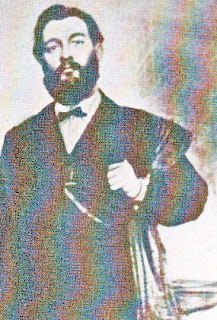
Francisco Solano Lopez

In 1853 while touring Europe in order to learn modern methods of modern adminstration and Military technique and also to get contacts in order to facilitate the export of Paraguayan products. Francisco meet the Irish courtesan Elisa Lynch in Paris and fell in love with her and brought her back to Paraguay where she swiftly became well hated by other members of Francisco’s family and also Francisco’s most important advisor.4

Elisa Lynch

Francisco didn’t help his post war reputation by indulging in various atrocities, (the extent to which is debated to this day), including the torture and murder of various foreigners, the execution of several of his brothers in law and eventually ordering the executions of his sisters and mother. All of this has given Francisco a well deserved reputation for cruelty.5

Aside from his cruelty for which there is amble evidence, although it is a reasonable speculation that his enemies exaggerated it for foreign and indeed propagandistic consumption. Even some of the contemporary accounts may be flawed by exaggeration and bias.6 However it does appear that Francisco Solano Lopez did to an incredibly, almost megalomaniac extent identify himself with his nation and certainly towards the end may have been close to insane.7 He seemed to have had a rather dangerous illusion that he and his nation / people were one, so that if he was overthrown his nation would be destroyed. Well this came stunningly close to actually happening. The war did not end until Lopez was killed in 1870.


Battle of Riachuelo

Popular accounts of the war often give absurd figures for Paraguay’s losses, for example: supposedly at the end of the war Paraguay’s population which had been 1, 337,000 in 1864 had been reduced to 221,000 of which only 29,000 were adult males or that the population had been 1,400,000 in 1864 reduced to 221,000 of which 106,000 were women, 86,000 were children and 29,000 were men.8

Among the more reasonable scholars there has been debate. Certainly no one who has looked into the matter takes any population figure for Paraguay in 1864 of a million or over the slightest bit seriously. In fact the usual figures are usually given has follows 285,715 – 318,144 thousand9, 372,543-574,850 thousand based on different projections of population increase,10 and 420,000 – 450,000 thousand.11

Losses were subject to debate one author contended that the huge losses indicated in various accounts were false and ideas that Paraguay lost c. ½ her population were false. Instead the estimate was for between 8 – 17.9% of pre war population estimated to have been between 285,715-318,114 thousand. (Which works out to 21,257 – 54,079 losses). In fact the author contends that the lower figure and percentage is much more likely.12 this was disputed. It appears a lot of this was based on an implicit argument from incredulity.

It appears that in fact the debate about whether or not the losses of the Paraguayans were catastrophic has in fact been settled conclusively and the results are indeed mind blowing. In the late 1990’s a census was discovered in the Paraguayan Ministry of Defence which had been conducted in 1870.13 the figures recorded are terrifying. For example they give a total of 14,266 adult men, 50,977 adult women and 39,334 children out of a total of 116,351 total.14. These figures are incomplete and miss certain regions of the country and certain categories and there was probably some undercounting in the areas covered making the actual total of somewhere between 141,351 – 166,351. Given that the figure of 285, 715 for 1864 is almost certainly too low.15 and a figure of 420,000 – 450,000 for 1864 is more reasonable it appears that Paraguay did in fact experience a truly terrifying demographic disaster. Something on the order of 60 – 69%!!16 In fact just looking at the ratio of adult men to adult women has indicated in the census, (14,266 to 50,977, which works out to 3.57 adult women to 1 adult man), this if nothing else indicates a severe demographic disaster.17

Not quite has extreme as the first two figures quoted but pretty bad!

The above makes Lopez look pretty bad for dragging his country into such a war and then prolonging it past the point of any sense. However things are not quite so simple. After Lopez had so foolishly gotten himself ringed with enemies the Allied powers formalized their alliance by treaty; said treaty contained secret clauses (16, 17, 18) by which the allied powers stated clearly that their goal wasn’t simply the removal of the Lopez regime and securing river access to the interior but the satisfaction of their maximum territorial claims, which amounted to more than ½ of Paraguay!. The allies may have dressed up their aims for public consumption as a liberal and high minded fight against Dictatorship and “Barbarism”, but sheer naked imperialism played a very powerful role. The Argentineans for example discussed in secret with the Brazilians the idea of completely eliminating Paraguay and dividing it between Argentina and Brazil, most going to Argentina. Not surprisingly the Brazilians refused to go along with this.18


Map of Paraguay 1864.

To quote:

However, word of the treaty’s contents leaked after several months. The result, as Octaviano and his colleagues had foreseen, was that Paraguayan resistance stiffened in every way, for now the Paraguayan people saw that more than simple politics guided the ambitions of their enemies: Paraguay’s survival as a nation, as a community, was at stake. Given that fact, it mattered little that the marshal was irresponsible. [Lopez] The Paraguayan people would follow him, if necessary, down the long, painful trail to Armageddon.19
During the war there were various negotiations between Lopez and the allied power but frankly it is hard to disagree with the following appraisal.

For, from his point of view, he was never offered anything better than abject surrender, humiliating expulsion, and a reputation as the man who allowed almost half his country to be swallowed up by foreign powers. Few leaders would have found this an acceptable basis for peace, and few of his people did either.20
After the war the Domingo Faustino Sarmiento the Argentinean President wrote:

Providence decreed that a tyrant should cause the death of the Guarani people. [Paraguayan] It was necessary to purge the earth of all that human excrescence.21
Not quite an edifying, clear struggle against tyranny. Of course the Paraguayan people survived.

In fact the above comment, however disgusting, touches on several important facts about Paraguay and its people. That the great majority of the population is mestizo, i.e., of mixed Spanish and Indian ancestry and that the great majority of the population spoke Guarani, an Indian language, as their main language, and said language had a sort of official recognition at the time. These facts have had and continue to have a powerful influence in how Paraguayans see themselves. A distrust of their neighbours created by years of slave raids for Indian slaves and the thinly or not at all disguised contempt many had for the “Indian” Paraguayans also played a role and prepared them to fight hard.22

Among the enemies of Lopez were the well intentioned Brazilian Emperor Pedro II and the highly talented Argentinean diplomat / politician Mitre, who was instrumental in finally unifying Argentina. Perhaps I will discuss them in more detail another time.


Pedro II (Left) Bartolome Mitre (Right)

The war was characterized by savage battles, much suffering, and the incredible bravery of the Paraguayan people, soldiers and civilians alike. To quote one author:

The words “Paraguayan” and “courage” have mentioned so often together in this history that they have become synonymous…23

Battle of Avahy

In the end Lopez was finally killed, march 1870, leading a staving band of 500 ill equipped men, accompanied by perhaps 1000 starving civilians. His last words were “I perish with my country!” His body was buried near by at Cerro Cora in Paraguay, until it was moved to a much more lavish burial place in the capital Asuncion in the 1930’s.24

Elisa Lynch was sent into exile after the overthrow of Lopez, she returned to Paraguay in 1875 in a desperate effort to get back land that Lopez had given her, much expropriated from Lopez’s enemies in the last part of the war. It is hard not be either impressed by her courage and desperation, considering how hated she and her former lover were hated in Paraguay and blamed for the disaster that had fallen upon Paraguay, or be appalled by her sheer unmitigated gall in trying to regain possession of property, much of which had been gained by torture, execution and brute force. Elisa lynch died of stomach cancer in Paris in 1886. In the early 1960’s she was reburied with honours as a national heroine in Asuncion.25

In one of the ironies of history that by holding out so long, Paraguay enabled Argentina and Brazil to fall out with each other so that in the end although Paraguay lost a sizable chunk of territory, (c.¼ of its whole territory) but not all that the allies were planning to take from her in the beginning. Further the animosity between Brazil and Argentina so great Paraguay was able to regain some real independence.26

Paraguay emerged as a shattered broken society and people, with a stunningly lopsided sex ratio, unusual social arrangements and a devastated economy.27

Its interesting to contrast the almost insane determination of Paraguay to fight to the last with the American Civil War. Certainly in comparison the considerable Union and Confederate effort seems almost pathetic against the almost superhuman Paraguayan effort. It seems that to the Paraguayans a lot more was at stake and accordingly their effort was proportionally vastly greater.28

In the end the only real heroes in this whole sorry mess were the Paraguayan people whose endurance and courage in this war and its aftermath are amazing. It’s a pity this story isn’t more well known; if it was in a work of fiction it might be labeled has too unbelievable!


Paraguayan Mother and Child c. 1870

1. For books on the War of the Triple Alliance in English look for Kolinski, Charles J., Independence or Death, University of Florida press, Gainesville, 1965, Phelps, Gilbert, Tragedy of Paraguay, Charles Knight & Co. Ltd., London, 1975, To the Bitter End, Leuchars, Chris, Greenwood Press, London, 2002, Whigham, Thomas L., The Paraguayan War, vol. 1, University of Nebraska Press, Lincoln NB, 2002. For Aspects of the war see, Kraay, Hendrick, and Whigham, Thomas L., Editors, I Die with my Country, University of Nebraska Press, Lincoln NB., 2004, For contemporary accounts of the war see Burton, Richard Francis, Letters from the Battle-fields of Paraguay, Tinsley Brothers, London, 1870, (the Edition I have is an Elibron Classics Replica Edition),It can be found at Google Books, Here Washburn, Charles Ames, The History of Paraguay, two volumes, Lee and Shepard, Boston, 1871, (The Edition I have is an Elibron Classics Replica Edition in four volumes).It can be found at Making of America Books, Here Thompson, George, The War in Paraguay, Longmans, Green and Co., London, 1869, It can be found at Google Books Here. Masterman, George Frederick, Seven Eventful Years in Paraguay, Sampson Low, Son, and Marston, London, 1869, It can be found at Google Books, Here McMahon, General M. T., Paraguay and Her Enemies, Harper’s new monthly magazine, vol.40, Issue 237, (1870), pp. 421-429, which can be found at Cornell University Library Making of America, Here by the same author The War in Paraguay, Harper’s…, vol.40, Issue 239, (1870) pp. 633-647. can also be found at Making of America, Here, Bulfinch, S.G., Paraguay and the Present War, The North American review, vol. 109, Issue 225, (1869), pp. 510-543, can also be found at Making of America, Here.

2. For the causes of the war please see, Bethell, Leslie, The Paraguayan War, Institute for Latin American Studies, London, 1996. (Whole book is devoted to the causes) and Whigham, pp. 77-161, pp. 165-254, Phelps, pp. 84-102, Kolinski, pp. 64-95, Leuchars, pp. 21-53.

3. See Whigham, pp. 63-73, 89-92, 105-117, for some detail on Lopez and assessments of his character. Saeger, James Schofield, Francisco Solano Lopez and the Ruination of Paraguay: Honor and Egocentrism, Rowman & Littlefield Publishers, Inc, New York, 2007, for a very caustic but generally accurate portrayal of Lopez. It is also the only serious biography in English of Francisco Solano Lopez.

4. The number of useless “Biographies” in English of Elisa Lynch, which are in effect nothing more than novels crammed with sentimental hogwash and nonsense is annoying. The only English biography worth reading for real information rather than has an amusing piece of fiction is Rees, Sian, The Shadow of Elisa Lynch, Headline Book Pub., London, 2003. Do avoid Women on Horseback, by William Edmund Barrett, Frederick A. Stokes, New York, 1938, Empress of South America, by Nigel Cawthorne, William Heinemann, London 2003, Madame Lynch and Friend, by Alyn Brodsky, Cassell, London, 1976, unless you want to read heavily fictionalized novels. For a novel that bills itself has a novel and not a “Biography” try Tuck, Lily, The News from Paraguay, HarperCollins, Pub., New York, 2004. It won the National Book Award and is more historically accurate than either Barrett’s, Cawthorne’s, or Brodsky’s so-called “Biographies”.

5. For contemporary accounts of these atrocities see Bulfinch, Washburn, vol. 2, pp. 350-457, Thompson, 318-325, Masterman,144-158, 161-170, 240-304. For a more skeptical look at these atrocities see Burton, pp. xi, 128, 330. See also McMahon, both items. For more modern views see Leuchars, pp. 181-184, 188, Phelps, pp. 210-233, Kolinski, pp. 157-162, Washburn’s objectivity has been heavily questioned with good reason and it appears that Washburn may in fact have been involved in a real conspiracy against Lopez. For a collection of testimony and an investigation of the torture and imprisonment of foreigners in Paraguay, along with some pertinent questions involving Washburn's activities and the credibility of some of the testimony see Paraguayan Investigation 1870, A Report of the Committee On Foreign Relations (Report no. 65), Government Printing Office, Washington D.C., 1870. A copy can be found at Internet Archive, Here. See also Phelps above. Still that and later atrocities during Lopez’s retreat make for gruesome reading. See Leuchars, pp. 225-227, Kolinski, pp. 184, Phelps, pp. 252-255. Lopez’s sisters and mother survived.

6. See Ibid. Phelps.

7. See Footnote 3.

8. The first set of figures is from Vagts, Alfred, A History of Militarism, Revised Edition, The Free Press, New York, 1959, p. 470. The Second set of figures is from Dupuy, Ernest R., and Dupuy, Trevor N., The Encyclopedia of Military History, Harper and Row, Pub., New York, 1977, p. 911.

9. Reber, Vera Blinn, The Demographics of Paraguay: A Reinterpretation of the Great War, Hispanic American Historical Review, vol. 68, No. 2, (1988), pp. 288-319, p. 307.

10. Williams, John Hoyt, Observations on the Paraguayan Census of 1846, Hispanic American Historical Review, vol. 56, No. 3, (1976) pp. 424-437, p.436.

11. Whigham, Thomas L., Potthast, Barbara, The Paraguayan Rosetta Stone: New Insights into the Demographics of the Paraguayan War, Latin American Research Review, Vol. 34, No. 1, (1999), pp. 174-186, p. 179.

12. Reber, p. 307.

13. Whigham & Potthast, pp. 179-180.

14. Ibid. pp. 182-185, Table One. The figures for Adult Males, Adult Females and Children do not add up to 116,351 because some of the figures for various locations are total population figures and are not broken down by sex or age.

15. See Ibid. pp. 175-179.

16. Ibid. p. 185.

17. Calculation done by Pierre Cloutier

18. For a copy of the Treaty see Kolinski, pp. 219-222. For more of the discussion of the Treaty see Whigham, pp. 276-281.

19. Whigham, p. 281.

20. Leuchars, p. 190, Phelps, pp.164-168, Kolinski, 124-127.

21. Galeano, Eduardo, Memory of Fire: II Faces and Masks, W.W. Norton & Co., New york, 1978, p. 204.

22. Whigham, pp. 3-21, Phelps, pp. 1-14.

23. Leuchars, p. 201-202.

24. Leuchars, pp. 225-231, Kolinski, pp. 181-187, Rees, pp. 286 – 291, 317-318.

25. Rees, pp. 309-313.

26. Leuchars, pp. 233-236.

27. See Warren, Harris Gaylord, Paraguay and the Triple Alliance: The Post War Decade, University of Texas Press, Austin, 1978, Chapter, The Stricken Nation, pp. 29-46.

28, See Beringer, Richard F., Hattaway, Herman, Jones, Archer, Still, William N., Why the South Lost The Civil War, The University of Georgia Press, Athena GA., 1986, pp. 440-442, for the comparison.

Pierre Cloutier